
Author: Christos Chapeshis
Date: August 14, 2026
Gerontologist, CEO of ABeWER
BScN, Dipl. W, Dipl. N, Dipl. CN, RN, CDTT, MScG
Abstract
Bedridden patients with diabetes are at particularly high risk of diabetic foot deterioration, heel pressure injury, malleolar pressure injury, pressure ulcers and other forms of tissue damage commonly described as pressure sores or bedsores. Their vulnerability results from the interaction of diabetic peripheral neuropathy, peripheral artery disease, impaired tissue tolerance, immobility, oedema, systemic illness, malnutrition and an inability to recognise or respond to harmful mechanical loading.
In hospitals, rehabilitation centres, nursing facilities and home-care environments, prevention cannot depend on a standard hospital mattress alone. Effective risk management requires comprehensive assessment, regular inspection of the feet and lower limbs, vascular evaluation, pressure redistribution, dedicated heel offloading, reduction of friction and shear, individualised repositioning and timely multidisciplinary intervention.
Pressure-redistribution foam mattresses and conventional alternating-pressure hospital mattresses contribute to pressure injury prevention. These surfaces commonly address only selected parts of the patient’s mechanical-risk environment. The ABeWER multiTURN® 6 is differentiated by integrating multiple clinically relevant functions into one multifunction hospital mattress system. These include automated lateral turning, alternating-pressure therapy, continuous low-pressure support, heel-focused pressure relief, head and leg positioning, an anti-collapse structure and configurable repositioning cycles.
This combination is especially relevant to immobile patients with diabetes because the risk of diabetic foot injury is not confined to one anatomical point or one mechanism. The same patient may simultaneously experience prolonged pressure at the heel, contact at the medial or lateral malleolus, compression around the Achilles region, pressure beneath the calf, plantar contact with the bed frame, shear caused by sliding and an inability to reposition independently.
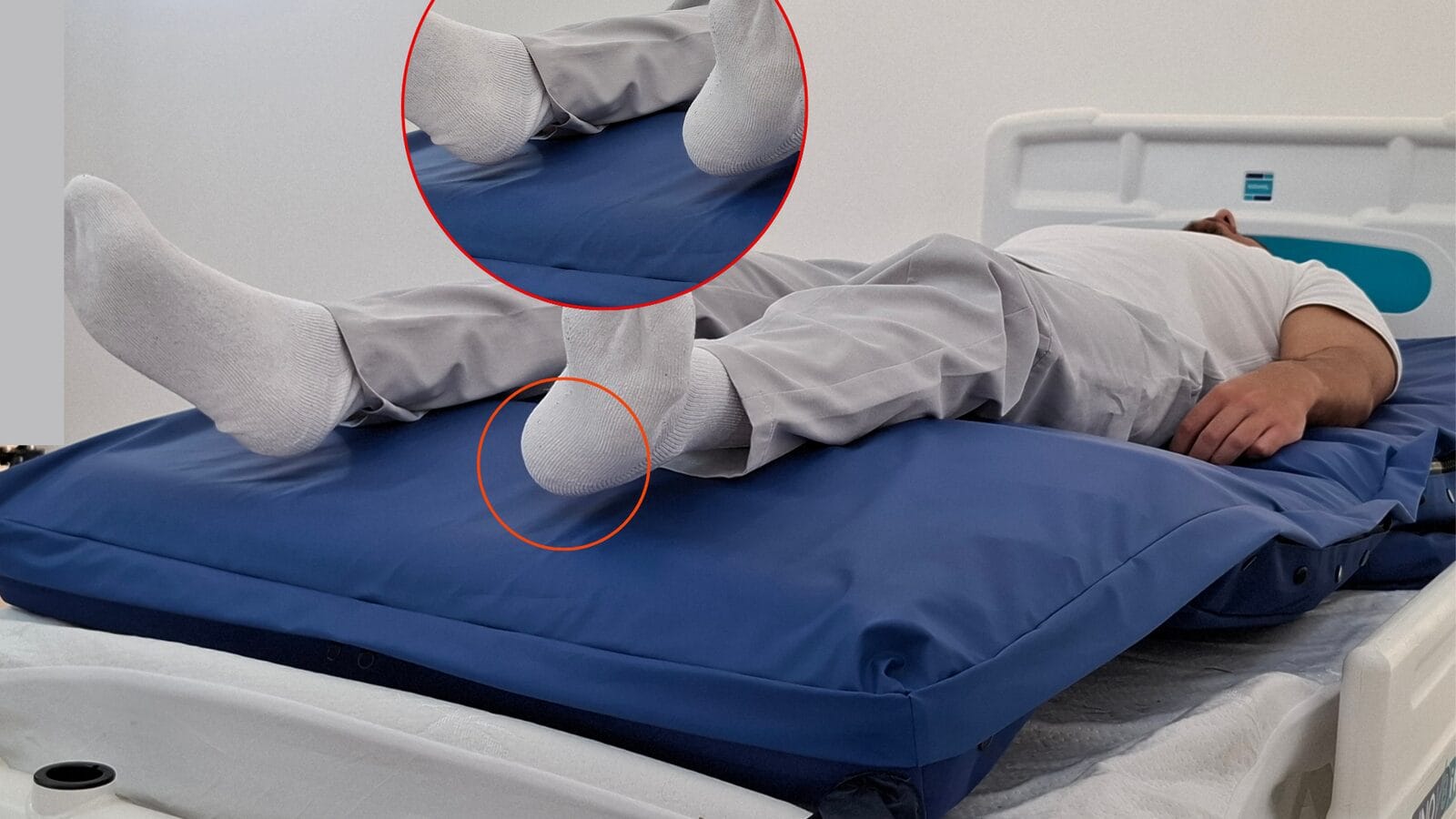
The multiTURN® 6 Heel Function is intended to minimise external loading at the calcaneus, medial and lateral malleoli, Achilles region and distal foot. It may also help prevent the plantar surface and toes from being pressed against the footboard when a patient slides down the bed. By supporting the lower limb and redistributing loading across a broader area of the calf, the Heel Function may help protect tissues with reduced tolerance to sustained pressure and deformation.
This protection is particularly important in diabetes because neuropathy may remove warning pain, while arterial disease may limit the ability of tissue to withstand loading or recover after compression. When severe arterial ischaemia is not present, reducing avoidable external pressure may help preserve the perfusion that remains available to vulnerable tissues.
The system should not be described as restoring arterial circulation, treating peripheral artery disease or guaranteeing the prevention or healing of diabetic foot ulcers. The term “zero pressure” should be understood as the intended elimination of direct surface contact at a fully suspended anatomical site and not as a universal physiological outcome unless verified in the individual patient.
The most clinically responsible positioning of the ABeWER multiTURN® 6 is as an advanced multifunction hospital mattress system designed to reduce avoidable mechanical stress and support comprehensive pressure injury, pressure ulcer, bedsore and diabetic foot protocols. Nurses, doctors, podiatrists, physiotherapists, wound-care specialists and vascular teams remain essential. Hospital mattress distributors and hospital bed distributors also play an important role in appropriate product selection, training, technical support and long-term clinical implementation.
Keywords
diabetic foot; diabetic foot ulcer; bedridden patient; pressure injury; pressure ulcer; pressure sore; bedsores; heel pressure injury; heel ulcer; heel offloading; automatic lateral turning mattress; automated repositioning; alternating-pressure mattress; continuous low pressure; hospital mattress; medical mattress; pressure redistribution; multifunction lateral turning mattress; ABeWER multiTURN® 6; nurse; nursing care; hospitals; hospital beds; podiatrist; physiotherapist; doctors; wound-care team; EPUAP; NPIAP; hospital mattress distributors; hospital bed distributors; diabetic neuropathy; peripheral artery disease.
1. Introduction
Diabetes-related foot disease is one of the most serious complications of diabetes mellitus. It includes ulceration, infection, tissue necrosis, Charcot neuro-osteoarthropathy and lower-extremity amputation. It leads to prolonged hospitalisation, repeated surgery, loss of mobility, reduced independence, increased caregiver burden and substantial healthcare expenditure.
Diabetic foot ulcers are often discussed primarily in relation to walking, footwear and repetitive plantar loading. This is appropriate for ambulatory patients, and a different pattern of mechanical risk develops when a patient becomes bedridden, critically ill, neurologically impaired, severely frail or dependent on others for repositioning.
In a walking patient, tissue stress frequently occurs at plantar sites exposed to repeated loading during standing and gait. In a bedridden patient, the principal mechanical challenge may shift towards prolonged loading of the posterior heel, medial and lateral malleoli, lateral border of the foot, Achilles region and other tissues compressed between bony structures and the hospital mattress.
The plantar foot may also remain at risk. When the head of a hospital bed is elevated, the patient may gradually slide towards the foot of the bed. The sole, toes or forefoot can then press against the footboard or bed frame. A patient with diabetic peripheral neuropathy may not feel this contact and may therefore remain exposed for a prolonged period.
Diabetes magnifies the consequences of these mechanical risks. Peripheral neuropathy reduces protective sensation and the normal warning response to pain or pressure. Peripheral artery disease reduces the delivery of oxygen and nutrients to the tissues. Oedema increases skin fragility. Renal disease, anaemia, infection, malnutrition and systemic inflammation further impair tissue tolerance and wound healing.
Prevention in a bedridden person with diabetes must therefore combine the principles of diabetic foot care with the principles of pressure injury prevention. It must address pressure, shear, friction, vascular status, sensory loss, skin condition, nutrition, body position and the patient’s ability to move independently.
The European Pressure Ulcer Advisory Panel, National Pressure Injury Advisory Panel and Pan Pacific Pressure Injury Alliance emphasise that repositioning remains necessary regardless of the type of support surface in use. No hospital mattress can completely replace repositioning, clinical assessment or skin inspection. Repositioning intervals and positions should be individualised according to the patient’s mobility, tissue tolerance, clinical condition, comfort and response to the support surface.
Within this context, multifunction support systems may offer practical advantages over products that address only one part of the risk environment. The ABeWER multiTURN® 6 combines automated lateral turning with alternating pressure, continuous low-pressure support and specialised lower-limb positioning. Its potential clinical value lies in helping nurses and multidisciplinary teams implement several elements of pressure injury prevention within one integrated hospital mattress system.
2. Diabetic Foot Pathophysiology
2.1 Peripheral sensory neuropathy
Diabetic peripheral neuropathy is a major contributor to foot ulceration. Sensory neuropathy diminishes the perception of pain, pressure, temperature and vibration.
In a healthy person, discomfort at the heel or ankle usually stimulates an unconscious movement or change of position. A patient with neuropathy may not perceive the need to move. The heel may remain compressed against the mattress, the malleolus may remain in contact with the bed surface or one ankle may rest against the other without producing a warning sensation.
This creates an important difference between the neuropathic and non-neuropathic patient. The absence of pain does not indicate the absence of tissue stress. The absence of pain may increase risk, because pressure exposure continues without a protective response.
For the nurse, this means that patient reporting alone is insufficient. Regular visual and tactile inspection is essential, even when the patient denies pain or discomfort.
2.2 Motor neuropathy and deformity
Motor neuropathy may cause muscle weakness, imbalance and changes in foot architecture. Claw toes, prominent metatarsal heads, limited joint mobility and altered foot posture can develop.
In ambulatory patients, these changes produce abnormal plantar loading. In bedridden patients, deformity creates prominent contact points at the toes, lateral foot, malleoli or heel. A foot that remains externally rotated may load the lateral malleolus and lateral border of the foot. A rigid plantar-flexed position may bring the toes into contact with the footboard.
A podiatrist or physiotherapist can help identify deformity and determine whether additional positioning support is required.
2.3 Autonomic neuropathy and skin vulnerability
Autonomic neuropathy may reduce sweating and contribute to dry skin. Dry skin can crack and form fissures, especially around the heel. These fissures can become portals for infection.
At the same time, moisture from incontinence, wound exudate or inadequate drying can cause maceration. The diabetic foot may therefore be exposed to either excessive dryness or excessive moisture. Both conditions require appropriate skin care and regular inspection.
2.4 Peripheral artery disease
Peripheral artery disease is common in people with diabetes, especially among those with a history of ulceration or amputation. Reduced arterial inflow limits oxygen delivery and decreases tissue tolerance to sustained mechanical loading.
A healthy tissue may recover after a period of compression. Ischaemic tissue has less capacity to tolerate the same exposure and may deteriorate more rapidly.
Pressure redistribution does not treat arterial obstruction. A hospital mattress cannot replace vascular assessment, imaging, revascularisation or specialist medical care. Reducing avoidable external pressure is still important, because it removes an additional source of mechanical compromise.
The Heel Function of the multiTURN® 6 should therefore be described as protecting the foot from external pressure rather than improving arterial circulation directly.
2.5 Oedema
Oedema increases tissue volume and skin tension. Oedematous skin is often fragile, easily damaged and more susceptible to blistering.
Swelling also changes the fit of heel-protection devices. A device that is safe at one point may become constrictive several hours later. Straps, seams or rigid edges may produce a new pressure injury.
An integrated lower-limb support function reduces reliance on separate straps and boots in some patients. The calf, ankle and foot must still be examined frequently.
2.6 Malnutrition, renal disease and systemic illness
Malnutrition, inadequate protein intake, chronic kidney disease, anaemia and systemic inflammation reduce tissue integrity and impair wound healing.
Critically ill patients may also experience systemic hypoperfusion. Vasopressor therapy, fever, infection and haemodynamic instability can further compromise peripheral tissues.
These factors demonstrate why the selection of a hospital mattress is only one part of prevention. Nutrition screening, medical assessment, glycaemic management, hydration and multidisciplinary treatment remain essential.
3. Diabetic Foot Ulcers and Pressure Injuries Are Not Identical
The terms diabetic foot ulcer and pressure injury should not be used as synonyms.
A diabetic foot ulcer is a break in the skin of the foot in a person with diabetes. It is commonly associated with neuropathy, peripheral artery disease, repetitive mechanical stress, deformity or a combination of these factors.
A pressure injury is localised damage to the skin and underlying tissue caused by pressure or pressure combined with shear. A heel pressure injury may occur in any immobile patient, whether or not the person has diabetes. The terminology of pressure injuries matters here, because the label chosen at the bedside shapes the plan that follows.
In a bedridden patient with diabetes, the two conditions can overlap. A posterior heel wound may be a pressure injury occurring in a person with diabetes. A plantar ulcer may have developed from neuropathic loading before the patient became immobile. A malleolar wound may develop because of sustained lateral contact during bed rest.
This distinction matters because the mechanism influences prevention and treatment.
A plantar neuropathic ulcer in an ambulatory patient may require a knee-high offloading device. A heel pressure injury in a bedridden patient requires suspension or effective offloading of the heel, management of shear and assessment of vascular status.
The International Working Group on the Diabetic Foot identifies the reduction of mechanical tissue stress as a central part of diabetic foot ulcer management. In bedridden patients, this principle must be translated from gait-related offloading to bed-related offloading.
4. Why the Heel Is Highly Vulnerable
The calcaneus is a prominent bone with a relatively limited soft-tissue covering at its posterior surface. When a patient lies supine, the heel becomes one of the principal points of contact with the hospital mattress.
Tissue injury does not depend only on the pressure measured at the skin surface. Internal deformation, duration of loading, shear, tissue composition and perfusion all contribute.
A small area of visible discolouration may therefore represent more extensive damage beneath the skin. This is especially important in deep tissue pressure injury, where the surface appearance may underestimate the depth of injury.
The heel is particularly vulnerable in diabetes because:
- sensory neuropathy reduces warning pain;
- peripheral artery disease reduces tissue tolerance;
- oedema increases fragility;
- limited mobility prolongs loading;
- the patient may be unable to lift the leg;
- the calcaneus is close to the support surface;
- heel skin may be dry, fissured or callused;
- infection may progress rapidly once tissue damage occurs.
A heel pressure injury can have severe consequences. The heel has limited soft-tissue coverage, and infection may spread to deeper structures. In a patient with poor perfusion, healing can be prolonged and limb-threatening complications may develop.
For these reasons, heel protection should be considered a central component of care rather than a secondary detail.
5. The Medial and Lateral Malleoli
The medial and lateral malleoli are also superficial bony prominences.
The medial malleolus may be exposed when the ankles come into contact with one another. The lateral malleolus may be exposed when the foot rotates externally and rests against the hospital mattress.
During lateral positioning, the dependent ankle may carry additional load. A conventional mattress may not control foot rotation or prevent ankle-to-ankle contact.
The multiTURN® 6 Heel Function is relevant because it helps stabilise the lower limb and reduce direct contact at the malleoli. Automated turning must always be followed by visual confirmation that the ankles are correctly positioned.
The nurse should inspect:
- the skin over both malleoli;
- the space between the ankles;
- the lateral border of the foot;
- the heel;
- the Achilles region;
- any contact point created by bedding or positioning devices.
Patients with neuropathy may not report discomfort, so proactive inspection is essential.
6. The Achilles Region and Calf
Heel offloading must not simply transfer pressure from the heel to the Achilles tendon.
A narrow pillow placed directly beneath the ankle may suspend the heel but concentrate loading behind the Achilles region. A rigid edge or poorly fitted device may produce a new injury.
Effective offloading should distribute support along a broad section of the lower leg. The calf provides a larger contact area than the heel and can therefore be used to redistribute loading.
The multiTURN® 6 Heel Function is intended to support the lower limb over an extended area, helping to maintain heel suspension while avoiding concentrated pressure at the posterior ankle.
The calf must still be inspected. Oedema, frailty, vascular disease and fragile skin make calf tissues vulnerable. The knee should not be forced into excessive extension, and the popliteal region should not be compressed.
A physiotherapist may contribute to the assessment of lower-limb alignment, joint range, contractures and muscle tone.
7. Plantar Foot Protection and Sliding in Bed
The plantar surface of the foot is commonly associated with walking-related diabetic ulcers, and it can also be exposed to pressure in bed.
When the head section of a hospital bed is elevated, gravity may cause the patient to slide towards the footboard. The heel may drag along the mattress, increasing shear. The toes, forefoot or sole may then press against the bed frame.
This risk is particularly important in patients with:
- diabetic neuropathy;
- previous plantar ulceration;
- callus;
- toe deformity;
- amputation;
- Charcot neuro-osteoarthropathy;
- reduced consciousness;
- inability to reposition independently.
The lower-limb positioning function of the multiTURN® 6 helps maintain a safer distance between the foot and the bed frame. By supporting the leg and limiting distal migration, it may reduce plantar pressure and friction.
The hospital bed must still be adjusted correctly, and the nurse must verify that adequate space remains between the foot and the footboard.
8. Repositioning and the 30-Degree Lateral Tilt
Repositioning is a fundamental element of pressure injury prevention. It changes which tissues are exposed to loading and reduces the duration of pressure at one anatomical site.
There is no single repositioning interval that is suitable for every patient. The schedule should consider:
- mobility;
- ability to reposition independently;
- skin and tissue tolerance;
- vascular status;
- clinical condition;
- comfort;
- sleep;
- pain;
- body size;
- support surface;
- presence of wounds;
- treatment goals.
The 2025 international pressure injury recommendations identify individualised repositioning as good practice. They also suggest that two- or three-hourly repositioning may be appropriate for many at-risk patients when an appropriate pressure-redistribution support surface is used.
Repositioning should not become a rigid routine that ignores the patient’s response. If non-blanchable erythema, temperature change, induration, oedema or discolouration develops, the plan must be reassessed.
A 30-degree lateral tilt reduces direct loading at the sacrum while avoiding the high trochanteric pressure associated with a full 90-degree lateral position.
Moore, Cowman and Conroy investigated repositioning using a 30-degree tilt and reported a reduction in pressure ulcer incidence compared with standard repositioning practice. The evidence should not be interpreted as proving that one exact angle or schedule is ideal for every patient, and it supports the clinical rationale for controlled lateral positioning.
The multiTURN® 6 provides automated lateral turning, helping to deliver repeated positional changes in patients who cannot move themselves.
Automated turning may improve consistency, particularly in environments where manual repositioning is delayed by workload, emergencies or limited staffing. It may also reduce the number of high-force manual handling events.
Automated turning does not remove the responsibilities of the nurse. Staff must verify:
- correct patient alignment;
- safe position of the feet;
- absence of ankle-to-ankle contact;
- heel suspension;
- safe tubing and bed-rail configuration;
- patient tolerance;
- skin response;
- appropriate turning angle and interval.
9. Conventional Pressure-Redistribution Foam Mattresses
Medical-grade foam mattresses work through immersion and envelopment. The patient’s body sinks into the surface, allowing loading to be spread over a larger area.
The international pressure injury guideline recommends the use of pressure-redistribution foam surfaces for individuals at risk.
This does not mean that every product described as memory foam is suitable for a high-risk patient. A domestic memory-foam mattress should not be assumed to have the same properties as a certified medical hospital mattress.
Clinical selection should consider:
- foam density and hardness;
- immersion and envelopment;
- durability;
- patient weight and body dimensions;
- risk of bottoming out;
- ease of repositioning;
- bed compatibility;
- cleaning and infection-control requirements.
High-specification foam mattresses are appropriate for many patients. They are relatively simple and do not depend on electrical power.
Their limitation is that they are passive. They do not automatically change the patient’s body position, create lateral turns or provide active alternating pressure.
For a patient who is fully immobile, at very high risk or experiencing repeated skin deterioration, a multifunction active hospital mattress may provide broader support. The comparative reasoning behind that choice is set out in more detail in the review of intelligent support surfaces.
10. Conventional Alternating-Pressure Mattresses
Alternating-pressure mattresses use air cells that inflate and deflate in a repeated cycle. This periodically changes the areas of the body that bear loading.
Alternating pressure is useful in patients with severe immobility, high pressure injury risk or deterioration on an appropriate foam surface.
The Cochrane review by Shi et al. examined alternating-pressure active air surfaces for pressure ulcer prevention. The review demonstrates that these surfaces are an established category of pressure injury prevention technology, although certainty varies between comparisons and patient populations.
A conventional alternating-pressure mattress has limitations:
- it may alternate vertically without turning the whole body;
- it may not suspend the heel;
- it may not control foot rotation;
- it may not prevent plantar contact with the footboard;
- incorrect settings can reduce performance;
- electrical or pump failure can interrupt function;
- some patients may experience noise, movement or instability.
The multiTURN® 6 differs by combining alternating-pressure therapy with automated lateral turning and lower-limb positioning. A side-by-side account of the two approaches is given in the lateral rotation mattress versus alternating pressure mattress comparison.
11. The ABeWER multiTURN® 6 Multifunction Hospital Mattress System
ABeWER describes the multiTURN® 6 as an automated lateral-turning mattress system with alternating-pressure technology for pressure injury prevention and patient support.
The system integrates:
- automated lateral turning;
- alternating-pressure therapy;
- continuous low-pressure support;
- heel-focused pressure relief;
- leg positioning;
- head-section positioning;
- an anti-collapse structure;
- configurable cycle intervals;
- individual pressure settings;
- remote-control functionality.
The principal differentiator is functional integration.
A standard hospital mattress provides basic support. A pressure-redistribution foam mattress provides passive redistribution. A conventional alternating-pressure mattress changes air-cell loading. A lateral-turning bed changes body orientation.
The multiTURN® 6 brings multiple functions together within one hospital mattress platform. The next-generation system overview sets out how those functions were arrived at.
For a bedridden diabetic patient, this matters because risk is multifactorial. One intervention may not adequately address:
- heel pressure;
- malleolar pressure;
- sacral loading;
- plantar contact;
- shear;
- inability to turn;
- calf pressure;
- changes in body position.
The multiTURN® 6 can therefore be described as offering a broader combination of automated functions than a conventional single-function mattress.
It should not be described as clinically superior to every mattress for every patient unless direct comparative trials establish that outcome.
The appropriate evidence-aligned positioning is:
The ABeWER multiTURN® 6 integrates automated lateral turning, alternating pressure, continuous low-pressure support, specialised heel protection and lower-limb positioning within one advanced hospital mattress system. This multifunction configuration addresses a broader range of modifiable mechanical risks than conventional single-function support surfaces.
12. The Heel Function
12.1 Elimination of direct heel contact
The primary objective of the Heel Function is to remove or substantially reduce direct contact between the posterior heel and the mattress.
When the heel is fully suspended, direct surface pressure at the calcaneal contact point can be eliminated. This is the basis of the manufacturer’s “zero pressure” terminology.
In professional clinical communication, the preferred wording is:
The Heel Function is designed to achieve heel suspension and eliminate direct mattress contact at the calcaneus when correctly configured.
This wording is precise and avoids suggesting that all internal tissue stress is necessarily zero.
12.2 Protection of the malleoli
By supporting and stabilising the lower limb, the Heel Function reduces uncontrolled rotation and direct malleolar contact.
This is especially relevant during automated turning. When the body tilts laterally, the position of the lower leg and ankle changes. The system should maintain alignment while the nurse verifies that neither malleolus is exposed to concentrated loading.
12.3 Achilles protection
The function is designed to distribute loading along the calf rather than concentrating it at the posterior ankle.
This helps protect the Achilles region while keeping the heel suspended.
12.4 Plantar and toe protection
The Heel Function helps maintain the foot away from the bed frame. This protects the sole and toes from pressure caused by sliding.
12.5 Calf protection
The broad support area is intended to distribute pressure across the gastrocnemius rather than create a small, concentrated contact point.
The calf must still be inspected for redness, oedema or device-related pressure.
12.6 Tissue perfusion
Reducing sustained external pressure may help preserve local tissue perfusion by avoiding additional compression of small vessels.
This is particularly relevant when severe arterial ischaemia is not present. The tissue may have limited but clinically meaningful perfusion that should be protected from external mechanical stress.
The Heel Function does not increase arterial inflow and does not treat peripheral artery disease.
The medically appropriate statement is:
By reducing sustained external loading at the heel, malleoli, Achilles region and distal foot, the Heel Function may help protect the perfusion available to vulnerable tissues when severe arterial ischaemia is not present. It does not replace vascular assessment or treatment.
13. Comparison with Other Hospital Mattresses
13.1 Standard hospital mattress
A standard hospital mattress without validated pressure-redistribution properties is inadequate for a highly immobile patient.
The multiTURN® 6 provides active functions that a basic mattress cannot provide.
13.2 Pressure-redistribution foam mattress
High-specification foam is suitable for many patients and remains an important baseline technology.
The multiTURN® 6 offers automated turning, active alternating pressure and integrated heel positioning, functions not normally provided by a static foam mattress.
13.3 Conventional alternating-pressure mattress
A conventional alternating-pressure mattress changes loading between air cells.
The multiTURN® 6 combines alternating pressure with lateral turning and specialised lower-limb support.
13.4 Lateral-turning-only system
A turning-only system changes body orientation and may not provide alternating pressure within each position.
The multiTURN® 6 combines both functions.
13.5 Pillows and heel boots
Pillows and heel boots are effective when correctly used. They can move, rotate, compress or create pressure at straps and edges.
An integrated Heel Function improves consistency, although some patients may still require additional specialist devices.
14. The Role of Nurses
Nurses are central to diabetic foot and pressure injury prevention because they provide continuous clinical observation. That role is examined in more depth in the nurse’s role in pressure ulcer prevention.
Nursing responsibilities include:
- inspecting the heel, malleoli, Achilles region, calf, toes and plantar foot;
- confirming heel suspension;
- checking for contact with the footboard;
- assessing skin colour and temperature;
- identifying non-blanchable erythema;
- monitoring oedema;
- checking hospital mattress settings;
- confirming patient alignment;
- documenting repositioning;
- escalating vascular or wound concerns;
- educating patients and caregivers.
The automated hospital mattress supports nursing care and does not replace it.
Nurses must also monitor patient tolerance. Some patients may experience discomfort, anxiety or sleep disturbance during movement. Settings should be individualised.
15. The Role of Doctors
Doctors assess the broader medical factors that influence tissue integrity.
These include:
- peripheral artery disease;
- infection;
- renal disease;
- anaemia;
- haemodynamic instability;
- glycaemic control;
- medication;
- nutritional risk;
- pain;
- systemic inflammation.
Urgent medical assessment is required for:
- gangrene;
- rapidly progressive tissue loss;
- suspected acute limb ischaemia;
- spreading infection;
- systemic sepsis;
- unexplained severe pain;
- sudden colour or temperature change;
- rapidly deteriorating ulceration.
The hospital mattress is supportive technology. It does not replace medical diagnosis or treatment.
16. The Role of the Podiatrist
A podiatrist contributes specialist expertise in diabetic foot risk, deformity, callus, skin and nail pathology, ulcer prevention and offloading.
In bedridden patients, podiatric assessment should include:
- previous ulcer history;
- previous amputation;
- foot deformity;
- callus;
- heel fissures;
- nail trauma;
- plantar lesions;
- toe pressure;
- malleolar contact;
- suitability of additional offloading devices.
The podiatrist can help determine whether the mattress Heel Function is sufficient or whether additional protection is required.
17. The Role of the Physiotherapist
Physiotherapists assess movement, joint range, contractures, muscle tone and functional ability.
Their role may include:
- early mobilisation;
- passive and active movement;
- lower-limb positioning;
- contracture prevention;
- transfer training;
- rehabilitation;
- assessment of tolerance to lateral turning.
Automated repositioning does not replace mobilisation when mobilisation is safe and clinically appropriate.
18. Hospitals and Healthcare Facilities
Hospitals should have access to a range of support surfaces suitable for different patient needs.
The multiTURN® 6 is especially relevant in:
- intensive care units;
- vascular wards;
- diabetic foot units;
- neurological wards;
- geriatric departments;
- rehabilitation hospitals;
- orthopaedic wards;
- long-term-care facilities;
- palliative care;
- home-care programmes.
Hospitals should establish procedures for:
- patient selection;
- mattress setup;
- turning-angle selection;
- cycle settings;
- heel verification;
- cleaning;
- electrical safety;
- emergency procedures;
- staff training;
- documentation;
- maintenance.
A technically advanced hospital mattress can only deliver its intended functions when it is correctly selected and used. Day-to-day care for patients with limited mobility covers what that looks like at the bedside.
19. EPUAP and NPIAP Principles
The EPUAP and NPIAP contribute to international pressure injury prevention guidance.
Key principles include:
- reposition patients at risk regardless of the support surface;
- individualise repositioning;
- offload pressure points;
- minimise friction and shear;
- assess early signs of tissue injury;
- consider 30-degree lateral positioning;
- select an appropriate pressure-redistribution surface;
- use clinical judgement.
The multiTURN® 6 supports these principles through controlled lateral turning and active pressure redistribution.
It should be presented as a tool that supports EPUAP and NPIAP-aligned care rather than a replacement for clinical guidance.
20. Hospital Mattress Distributors and Hospital Bed Distributors
Hospital mattress distributors and hospital bed distributors have a significant role in safe implementation.
Their responsibilities should include:
- product education;
- setup training;
- compatibility assessment;
- guidance on weight limits;
- cleaning protocols;
- maintenance;
- pump servicing;
- spare parts;
- technical support;
- clinical follow-up.
Hospital bed distributors should verify that the mattress does not create entrapment risks or interfere with side rails.
The multiTURN® 6 should be marketed as specialist medical technology, not as a consumer air mattress.
For distributors, the principal value proposition is its integration of automated repositioning, alternating pressure and heel protection in one system.
21. Economic and Organisational Implications
Diabetic foot disease and pressure injuries generate substantial direct and indirect costs.
Direct costs include:
- hospital admission;
- nursing care;
- dressings;
- antibiotics;
- imaging;
- surgery;
- vascular procedures;
- rehabilitation;
- specialist follow-up;
- equipment.
Indirect costs include:
- loss of independence;
- caregiver time;
- disability;
- transport;
- lost employment;
- reduced quality of life.
Pressure injuries also increase nursing workload and may extend hospital length of stay.
The economic value of an advanced hospital mattress should not be evaluated solely according to purchase price.
Relevant outcomes include:
- pressure injuries avoided;
- heel injuries avoided;
- reduced wound-treatment costs;
- reduced manual repositioning burden;
- improved turning compliance;
- reduced staff musculoskeletal strain;
- reduced hospitalisation;
- reduced readmission;
- improved patient comfort.
Hospitals adopting the multiTURN® 6 should collect real-world data. This can include baseline pressure injury incidence, heel pressure injury incidence, nursing time, turning compliance, patient comfort, maintenance costs and wound outcomes.
Such data can strengthen clinical governance and support evidence-based procurement.
22. Recommended Clinical Protocol
22.1 Admission assessment
At admission:
- Complete a pressure injury risk assessment.
- Inspect both feet and lower limbs.
- Record previous ulceration or amputation.
- Assess protective sensation where appropriate.
- Assess vascular status.
- Identify oedema and deformity.
- Review mobility and ability to reposition.
- Assess nutrition.
- Review cognition and pain.
- Select the support surface.
22.2 Mattress setup
Verify:
- correct inflation;
- correct pressure settings;
- appropriate patient weight range;
- correct turning interval;
- safe tubing;
- correct bed compatibility;
- heel suspension;
- safe foot position;
- absence of bottoming out.
22.3 Daily inspection
Inspect:
- heel;
- malleoli;
- Achilles region;
- calf;
- toes;
- plantar surface;
- interdigital spaces.
Look for:
- redness;
- discolouration;
- swelling;
- blistering;
- temperature change;
- necrosis;
- drainage;
- odour;
- fissures;
- new wounds.
22.4 Repositioning
Integrate automated turning into an individualised regimen.
Manual checks and small positional changes may still be required.
22.5 Vascular escalation
Seek urgent vascular assessment where there is:
- new necrosis;
- gangrene;
- cold foot;
- pallor or cyanosis;
- rest pain;
- rapidly worsening ulceration;
- suspected acute limb ischaemia.
22.6 Infection management
An infected diabetic foot ulcer may require urgent antibiotics, surgery or hospital treatment. Stage-specific wound dressing selection is a separate decision from support-surface selection.
The mattress does not treat infection.
22.7 Nutrition and metabolic care
Complete nutrition screening and provide an individualised plan where needed.
Optimise glycaemic care while avoiding unsafe hypoglycaemia.
22.8 Documentation
Document:
- mattress mode;
- pressure settings;
- turning cycle;
- heel position;
- skin observations;
- patient tolerance;
- escalation;
- maintenance issues.
23. Safety Boundaries
The multiTURN® 6 should not be presented as:
- a treatment for arterial disease;
- a substitute for revascularisation;
- a treatment for infection;
- a replacement for wound care;
- a guarantee against ulceration;
- universally appropriate for every patient;
- a replacement for repositioning;
- a replacement for clinical inspection.
Patients with unstable fractures, spinal instability, severe contractures, complex postoperative restrictions, severe pain or intolerance to movement require individual assessment.
Electrical failure, disconnected tubing or incorrect settings may reduce performance. Hospitals need maintenance and contingency procedures.
24. Evidence-Based Positioning of Superiority
The multiTURN® 6 can credibly be described as superior in functional integration when compared with single-function hospital mattresses.
It offers:
- automated turning that foam does not provide;
- alternating pressure;
- continuous low-pressure support;
- heel suspension;
- malleolar protection;
- lower-limb positioning;
- protection against footboard contact;
- configurable cycles;
- anti-collapse support.
Universal clinical superiority cannot be claimed without direct comparative evidence.
The recommended positioning statement is:
For bedridden patients with diabetes who face simultaneous risks from immobility, heel loading, malleolar contact, shear and inability to reposition, the ABeWER multiTURN® 6 provides a broader combination of automated protective functions than conventional single-function hospital mattresses. Its integrated design connects repositioning, pressure redistribution and heel protection within one advanced support system.
25. Research Priorities
Further research should examine:
- pressure mapping at the heel;
- pressure mapping at the malleoli;
- pressure beneath the calf;
- verification of heel suspension;
- patient comfort;
- nursing workload;
- incidence of heel pressure injury;
- outcomes in diabetic patients;
- outcomes in peripheral artery disease;
- comparative effectiveness;
- cost-effectiveness;
- device-related complications.
Claims of zero pressure should ideally be supported by pressure mapping under clearly defined operating conditions. That work sits with the ABeWER research and development department.
26. Conclusion
Bedridden patients with diabetes require a comprehensive prevention strategy that extends beyond footwear and walking-related offloading.
Their risks include sustained heel pressure, malleolar compression, Achilles-region loading, plantar contact with the hospital bed frame, shear caused by sliding and inability to reposition independently.
These factors contribute to diabetic foot ulcers, heel pressure injuries, pressure ulcers, pressure sores and bedsores.
The ABeWER multiTURN® 6 is distinguished by combining automated lateral turning, alternating pressure, continuous low-pressure support, anti-collapse support and heel-focused lower-limb positioning within one advanced hospital mattress system.
The Heel Function is particularly important because it is designed to:
- eliminate direct heel contact;
- protect the medial and lateral malleoli;
- reduce pressure around the Achilles region;
- protect the plantar foot;
- prevent contact with the footboard;
- distribute support across the calf.
When severe arterial ischaemia is not present, reducing external pressure may help protect the tissue perfusion that remains available. The system does not treat arterial disease, and it can reduce an avoidable mechanical threat to vulnerable tissues.
The multiTURN® 6 does not replace daily foot inspection, vascular assessment, infection control, nutrition, wound treatment or clinical judgement.
Nurses, doctors, podiatrists, physiotherapists, wound-care specialists and vascular teams remain essential.
Hospitals must ensure correct patient selection, staff training, setup and maintenance. Hospital mattress distributors and hospital bed distributors must provide technical support, compatibility assessment and continuing education.
Within this comprehensive framework, the ABeWER multiTURN® 6 can be positioned as a premium and medically credible hospital mattress system for pressure injury, pressure ulcer, bedsore and diabetic foot risk management in high-risk bedridden patients.
Clinical teams and procurement leads who want to discuss patient selection or arrange an assessment can contact ABeWER, or read about the clinical background of the people behind the system on the ABeWER team page.
References
ABeWER (no date a) ABeWER pressure injury prevention and treatment solutions. Available at: https://abewer.com/ (Accessed: 2 August 2026).
ABeWER (no date b) multiTURN® 6 automatic lateral turning mattress for pressure injury prevention. Available at: https://abewer.com/multiturn-6-automatic-lateral-turning-mattress-pressure-injury-prevention/ (Accessed: 2 August 2026).
ABeWER (no date c) ABeWER blog. Available at: https://abewer.com/blog/ (Accessed: 2 August 2026).
Bus, S.A. et al. (2024a) ‘Guidelines on offloading foot ulcers in persons with diabetes: IWGDF 2023 update’, Diabetes/Metabolism Research and Reviews, 40(3), e3647. https://doi.org/10.1002/dmrr.3647
Bus, S.A. et al. (2024b) ‘Guidelines on the prevention of foot ulcers in persons with diabetes: IWGDF 2023 update’, Diabetes/Metabolism Research and Reviews, 40(3), e3651. https://doi.org/10.1002/dmrr.3651
Gillespie, B.M. et al. (2020) ‘Repositioning for pressure injury prevention in adults’, Cochrane Database of Systematic Reviews, 6, CD009958. https://doi.org/10.1002/14651858.CD009958.pub3
Moore, Z., Cowman, S. and Conroy, R.M. (2011) ‘A randomised controlled clinical trial of repositioning, using the 30° tilt, for the prevention of pressure ulcers’, Journal of Clinical Nursing, 20(17–18), pp. 2633–2644. https://doi.org/10.1111/j.1365-2702.2011.03736.x
National Pressure Injury Advisory Panel, European Pressure Ulcer Advisory Panel and Pan Pacific Pressure Injury Alliance (2019) Prevention and treatment of pressure ulcers/injuries: Clinical practice guideline. 3rd edn. Haesler, E. (ed.). EPUAP/NPIAP/PPPIA.
National Pressure Injury Advisory Panel, European Pressure Ulcer Advisory Panel and Pan Pacific Pressure Injury Alliance (2025) Prevention and treatment of pressure ulcers/injuries: Quick reference guide. 4th edn. Haesler, E. (ed.). Available at: https://internationalguideline.com/ (Accessed: 2 August 2026).
Sauvage, P. et al. (2017) ‘Pressure ulcers prevention efficacy of an alternating pressure air mattress in elderly patients: E²MAO, a randomised study’, Journal of Wound Care, 26(6), pp. 304–312. https://doi.org/10.12968/jowc.2017.26.6.304
Shi, C. et al. (2021) ‘Alternating pressure active air surfaces for preventing pressure ulcers’, Cochrane Database of Systematic Reviews, 5, CD013620. https://doi.org/10.1002/14651858.CD013620.pub2