
Author: Christos Chapeshis
Date: September 6, 2026
Gerontologist, CEO of ABeWER
BScN, Dipl. W, Dipl. N, Dipl. CN, RN, CDTT, MScG
From manual care to clinical leadership: how technology can change the nurse’s role in pressure injury prevention and healing.
Modern nursing is changing. For decades a large part of the working day has been repetitive and physically demanding: moving patients, lifting, repositioning, turning by hand, and trying to hold a prevention schedule together inside an already crowded shift.
A nurse is not a worker who performs manual tasks. A nurse assesses risk, observes skin and tissue condition, and evaluates mobility, nutrition, perfusion, pressure tolerance and overall clinical status. A nurse develops interventions, coordinates teams, educates patients and caregivers, monitors outcomes and, above all, makes clinical decisions.
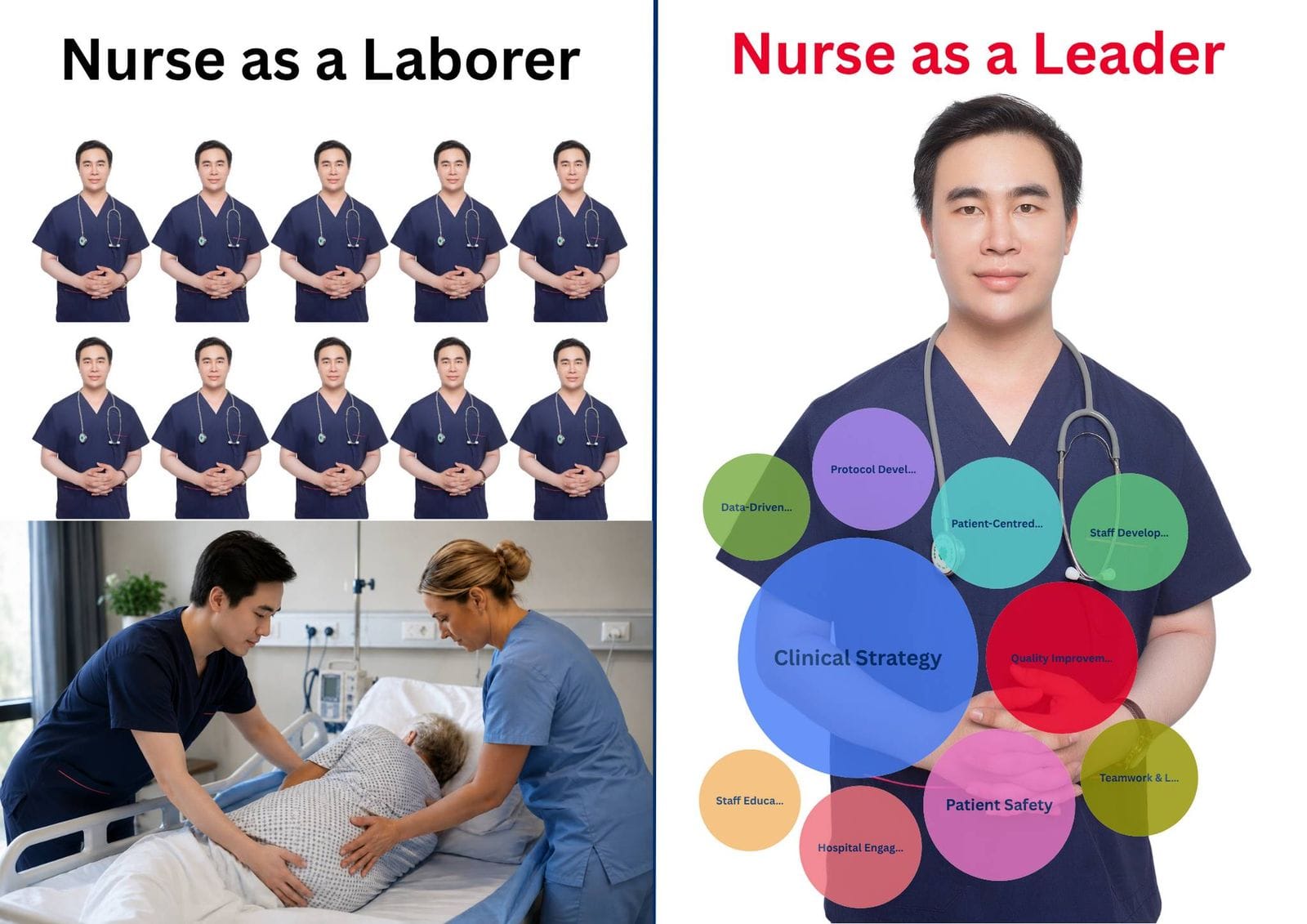
That is the role ABeWER wants to strengthen. Not the nurse as a labourer whose main responsibility is physically turning patients, but the nurse as the professional who designs, coordinates and leads a pressure care strategy.
When Prevention Depends Too Heavily on Manual Labour
Repositioning matters. The problem starts when an entire prevention strategy depends almost entirely on staff being physically able to perform repeated manual turns, day and night.
In a busy hospital the reality is more complicated. One nurse may be responsible for several patients at once. Some are heavy, immobile or fully dependent. Others carry multiple comorbidities, catheters, intravenous lines, respiratory support or a limited tolerance for being moved at all. A manual reposition may need two or more staff, has to be coordinated around every other nursing priority, and may have to be repeated through the whole shift.
When prevention rests mainly on the physical presence and physical strength of staff, the care model becomes labour-dependent, and the nurse is pushed toward functioning as a manual worker rather than a clinical decision-maker.
The labour-dependent cycle
Manual patient turning → staff dissatisfaction → work fatigue → higher-risk environment → outdated technologies → an environment that does not develop its people.
Once that becomes everyday practice the consequences run well past one difficult shift: fatigue, musculoskeletal strain, sickness absence, lower job satisfaction, reduced productivity, and a greater chance that staff go looking for work in another department or another hospital.
Technology in nursing is therefore not a question of convenience. It is a question of how clinical time and nursing expertise get used.
Repositioning Should Not Be a Mechanical Routine
International guidance has moved away from the idea that one fixed repositioning schedule suits every patient. The fourth edition of the International Guideline for the Prevention and Treatment of Pressure Ulcers/Injuries sets out that repositioning should follow an individualised regimen, with frequency determined through comprehensive assessment of mobility, the ability to reposition independently, skin and tissue tolerance, clinical condition, comfort, sleep patterns, goals of care and the support surface in use.
The guideline indicates that two-hourly or three-hourly repositioning may be considered for many patients when an appropriate pressure redistribution support surface is in place. That remains a conditional recommendation, and frequency still has to be individualised. For some patients the correct interval is as short as thirty minutes.
The message underneath it is worth stating plainly. We do not need more turning by routine. We need better clinical pressure management, and the difference between those two things is as much a matter of clinical language as it is of equipment.
Technology does not replace the nurse. It creates the conditions for nurses to use more of the thing no technology replaces, which is clinical judgement.
From “Turn the Patient” to “Manage the Pressure”
This is the shift that matters most. The traditional approach focuses on the task: we need to turn the patient. The modern approach focuses on the clinical objective: how do we manage pressure, shear, mobility, microclimate and the patient’s overall risk factors more effectively?
They are not the same thing. The first creates a task. The second creates a clinical strategy. The role of the nurse as a leader begins in that second sentence.
ABeWER Technologies: Reducing the Mechanical Burden
ABeWER technologies are built to reduce dependence on repeated manual turning and to support controlled, gentle and more frequent changes in position and pressure distribution. The multiTURN® 6 delivers automated lateral repositioning at programmed intervals alongside alternating pressure redistribution, within an individualised care plan and under clinical assessment.
That changes the logic of care. Instead of every repositioning event requiring staff to perform a full manual intervention at the bedside, part of the mechanical function moves to the system.
The objective is not to remove the nurse from the patient. It is the opposite: to remove part of the mechanical workload from the nurse, so the nurse can spend time on assessment, prevention, education, monitoring, clinical reasoning, strategy and leadership.
Greater Consistency, Less Dependence on Staff Availability
A prevention programme is only as reliable as its ability to be delivered consistently. In a manual repositioning model, delivery is affected by emergencies, staff shortages, workload, shift changes and simultaneous demands from other patients. Technology can improve the consistency of planned pressure care interventions.
International guidance recognises both the importance of repositioning and the role of pressure redistribution support surfaces. It also states that support surface selection should account for overall pressure injury risk, skin and tissue response, mobility, posture, microclimate needs, shear reduction needs, patient preferences and goals of care. The comparative reasoning behind those choices is set out in the comparison of lateral rotation and alternating pressure mattresses.
Technology belongs inside a clinical strategy, not beside it. That is exactly where the nurse becomes a leader.
What Happens at Night?
Night-time care sets two duties against each other. Vulnerable tissue has to be protected. Sleep, comfort, dignity and recovery also have to be protected. Repeated manual turning interrupts sleep, particularly when it happens several times between midnight and morning.
Current guidance now includes sleep patterns and comfort among the factors that should shape repositioning frequency, which is a meaningful development. The patient is not a pressure point that needs to be moved. The patient is a person who needs protection, rest, dignity and individualised care.
Gentle automated repositioning may reduce unnecessary night-time manual interventions where that is clinically appropriate. The result is a different philosophy of care: pressure redistribution without unnecessary disruption.
The Debate Around Two-Hourly Turning
In 2019, Sharp, Schulz Moore and McLaws published a paper in the Journal of Bioethical Inquiry with a deliberately provocative title: “Two-Hourly Repositioning for Prevention of Pressure Ulcers in the Elderly: Patient Safety or Elder Abuse?”
The study reviewed 80 medical records of elderly residents across eight aged-care facilities in Australia. Among residents identified as at risk and repositioned every two hours, a significant proportion still developed pressure ulcers toward the end of life. The authors asked whether strict, non-individualised two-hourly repositioning around the clock might in some circumstances contribute to sleep disruption, loss of dignity and unnecessary burden.
It would not be scientifically appropriate to take one study and conclude that two-hourly repositioning is by definition abuse. Its value lies in the question it raises. Do we keep applying rigid routines because this is how it has always been done, or do we design individualised care supported by modern technology?
The second is where contemporary pressure care is going.
Technology Does Not Eliminate Repositioning, It Makes It Part of a Smarter Strategy
A clinical clarification is needed here. No support surface should be presented as a technology that removes the need for clinical assessment and repositioning.
The 2025 International Guideline states that individuals with or at risk of pressure injuries should continue to be repositioned even when a pressure redistribution support surface is in use, although the interval may be adjusted depending on the capabilities of that surface and the patient’s response. The wider evidence base on preventative strategies points the same way.
That makes the ABeWER position stronger, not weaker. We are not saying technology instead of nursing. We are saying technology enabling better nursing. Technology manages more of the mechanical workload. The nurse manages the strategy.
Nurse as a Leader
What does it mean in practice? It means a nurse who is not spending most of a shift trying to keep up with the next manual task. It means a nurse with time to do the work below.
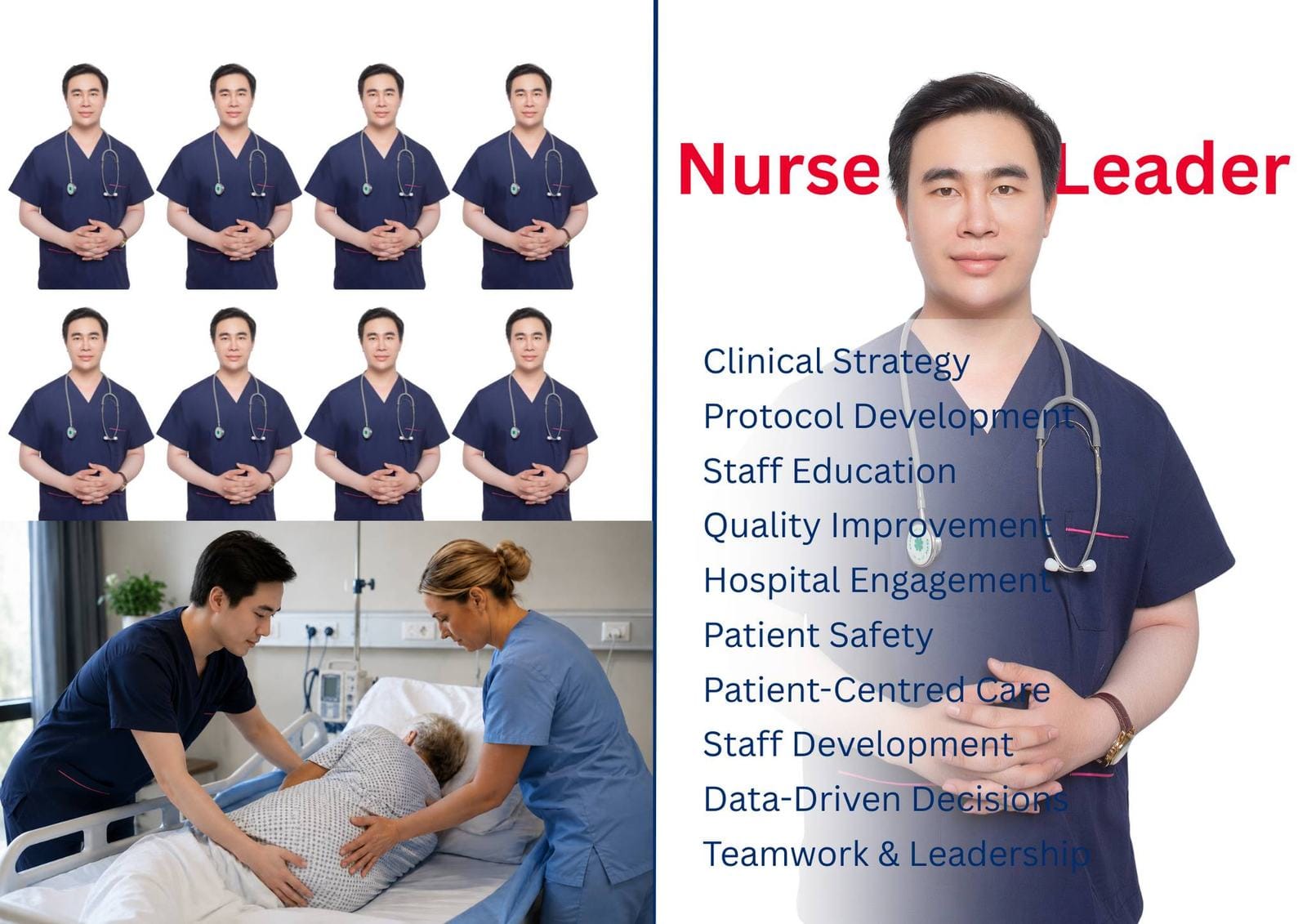
- Develop clinical strategies. Build individualised pressure injury prevention strategies around each patient’s risk profile.
- Establish protocols. Write clinical protocols for repositioning, skin assessment, support surfaces, heel offloading, nutrition and mobility.
- Educate staff. Train teams in current evidence and in the safe, effective use of technology.
- Lead quality improvement. Measure pressure injury incidence, protocol compliance, incidents, clinical outcomes and the openings for improvement.
- Promote patient safety. Identify risks early, before they turn into harm.
- Improve patient engagement. Explain to patients and families why a particular prevention strategy is necessary.
- Support staff development. Create an environment where nurses learn and strengthen their clinical reasoning.
- Use data and technology responsibly. Use both to support better decisions, never to replace clinical judgement.
- Build a culture of continuous improvement. Turn every outcome, every incident and every new piece of evidence into a chance to improve care.
This is the nurse the modern hospital needs, and it is the argument set out at greater length in the nurse’s role in pressure ulcer prevention.
From Staff Fatigue to Staff Development
Technology can change the working environment as well as the patient’s outcome.
The traditional model
Manual patient turning → physical workload → work fatigue → staff dissatisfaction → higher-risk environment → reduced productivity.
The model ABeWER supports
Technology-assisted pressure care → reduced manual burden → more clinical time → better use of staff → education and development → clinical leadership → a stronger prevention strategy.
This is more than automation. It is workforce change. When technology absorbs part of the repetitive mechanical workload, nurses can spend their time where it is worth most: not only delivering care, but designing it. The pressure injury prevention education programme in Nicosia is one example of what that time gets used for.
The Future Is Not Less Nursing. It Is More Nursing.
There is a common worry that automation reduces the human role. In nursing the opposite can be true. When technology takes over a heavy repetitive physical task, it does not reduce the value of the nurse. It exposes it.
The value of nursing was never the physical strength needed to turn a patient. It lies in knowing when, why, how often, into which position, with which support surface, under what monitoring, and as part of which overall clinical plan an intervention should happen.
Technology creates time. The nurse turns that time into better care.
ABeWER: Changing Pressure Care, Empowering Nursing Leadership
For ABeWER, developing pressure care technology is not about building better medical devices. It is about building a better model of care: one where technology supports more consistent pressure management, patients are protected with less unnecessary disruption, staff are relieved of part of the repetitive manual burden, and nurses can give more time to what defines the profession, which is clinical judgement, patient safety, education, strategy and leadership. The engineering work behind that sits with the ABeWER research and development department, and the clinical backgrounds behind it are on the ABeWER team page.
The future of pressure injury prevention cannot rest on asking staff to work harder. It has to rest on giving them the tools to work more safely and more strategically. From nurse as a labourer to nurse as a leader. From manual turning to intelligent pressure care. From performing a repetitive task to building a prevention strategy.
Join us to change pressure injury care. Clinical leads, ward managers and procurement teams who want to discuss what a technology-assisted prevention programme looks like on their own wards can contact ABeWER or reach us through the ABeWER distributor network.
References
National Pressure Injury Advisory Panel, European Pressure Ulcer Advisory Panel and Pan Pacific Pressure Injury Alliance (2025) Prevention and treatment of pressure ulcers/injuries: Clinical practice guideline. The International Guideline, 4th edn. Haesler, E. (ed.). Available at: https://internationalguideline.com/ (Accessed: 23 August 2026).
Sharp, C.A., Schulz Moore, J.S. and McLaws, M.-L. (2019) ‘Two-hourly repositioning for prevention of pressure ulcers in the elderly: patient safety or elder abuse?’, Journal of Bioethical Inquiry, 16(1), pp. 17–34. https://doi.org/10.1007/s11673-018-9892-3