
Author: ABeWER Clinical Team
Date: September 1, 2026
Advancing pressure injury prevention through innovation, clinical partnership and local expertise.
ABeWER has appointed Meneer Kooi B.V. as its Exclusive Business Distributor in the Netherlands. The agreement is already in effect, and an ABeWER visit to the Dutch team is scheduled for this month.
The Netherlands is a healthcare market with a strong culture of innovation and evidence-led practice. A dedicated local partner makes ABeWER’s pressure injury prevention technologies reachable for Dutch hospitals, rehabilitation centres, long-term care facilities, community care providers and patients receiving care at home.
For healthcare professionals in the Netherlands it means something more practical: local access to specialist advice, demonstrations, implementation support, training, technical service and continuing product support.
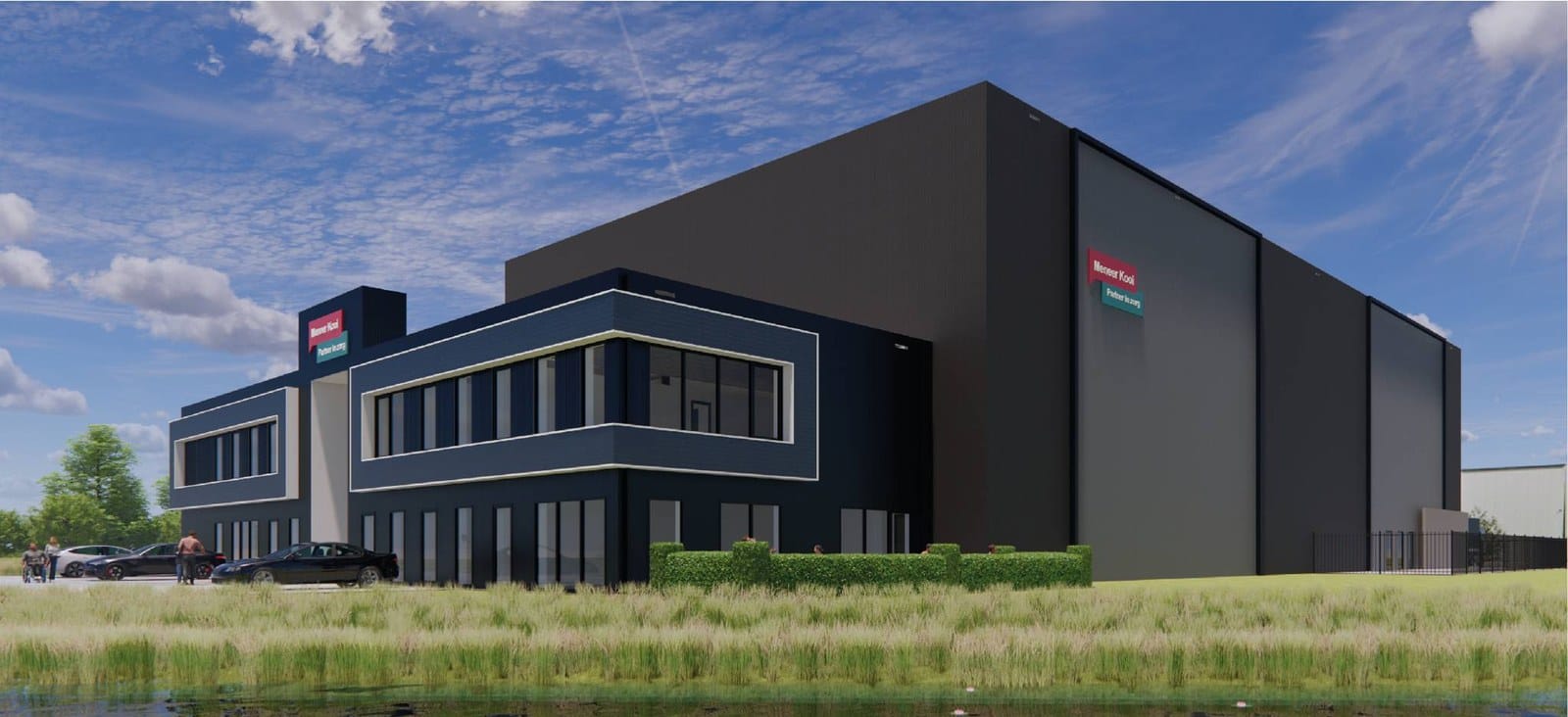
Introducing Meneer Kooi B.V.
Meneer Kooi B.V. is a Dutch healthcare equipment specialist supplying care organisations and individual users. Its existing categories include anti-decubitus equipment, mattresses, turning systems, repositioning systems, seating cushions, mobility products, beds and patient-transfer equipment. It also runs the services around them: consultation and equipment assessment, logistics, maintenance and repair, training, rental, depot management and track-and-trace.
That combination of product expertise and service infrastructure is why the partnership exists.
Pressure injury prevention cannot be delivered by supplying a mattress or a cushion. Implementation needs patient assessment, selection of the right technology, professional education, correct configuration, monitoring and ongoing technical support. A distributor without those capabilities can move boxes. It cannot support a prevention programme.
Meneer Kooi describes its own approach as working alongside healthcare organisations as a partner rather than as an equipment supplier, with particular emphasis on innovations that improve working conditions for healthcare professionals while supporting quality and affordability of care. That is close to ABeWER’s own direction.
ABeWER develops medical technologies around one question: how can technology support better pressure injury prevention while making complex daily care safer and more manageable for patients, nurses and caregivers? Through Meneer Kooi B.V., ABeWER now has a partner able to put that question to work inside the Dutch healthcare environment.
Pressure injury prevention is changing
Pressure injuries remain one of healthcare’s most persistent clinical problems, and they are rarely caused by pressure alone. Immobility, prolonged tissue loading, shear, friction, microclimate, nutrition, tissue tolerance, medical condition and the patient’s ability to reposition all influence risk. The terminology used to describe these injuries shapes the plan that follows, which is why precision matters at the bedside.
As understanding of these mechanisms has developed, prevention has moved away from the idea that one device or one intervention solves the problem. The 2025 International Guideline for the Prevention and Treatment of Pressure Ulcers/Injuries, fourth edition, sets out that multidimensional approach.
The guideline states that people at risk should continue to be repositioned regardless of the pressure-redistribution support surface in use, and that no support surface entirely replaces repositioning. Repositioning intervals should be individualised according to mobility, skin and tissue tolerance, clinical condition, comfort, the support surface and other patient-specific factors. It also suggests 30° lateral positioning for people at risk, individualised where necessary, alongside pressure redistribution through full-body support surfaces.
That leaves an open question for medical-device engineering, and it is the question ABeWER built its portfolio around. If repositioning and pressure redistribution are both essential to prevention, there is no obvious reason they should always arrive as two separate interventions.
Multifunction Lateral Turning Mattress technology, beyond the conventional air mattress
ABeWER built its pressure injury technology around the Multifunction Lateral Turning Mattress, or MLTM. Instead of treating the support surface as an alternating-pressure mattress, an MLTM integrates several pressure-management functions into one therapeutic platform.
The ABeWER multiTURN® 6 MLTM platform combines automated lateral turning, alternating pressure therapy, reactive low-pressure support, heel and ankle offloading strategies, shear and friction management, microclimate support and patient-specific pressure adjustment.
The point of this approach is not that technology replaces clinical judgement or nursing care. It does not. The objective is to let technology support the prevention plan more consistently.
A patient who cannot reposition independently still depends on effective pressure redistribution and repositioning. Automated systems can help healthcare teams deliver those interventions, while manual repositioning and professional assessment remain available whenever they are clinically required.
ABeWER therefore treats MLTM technology as part of a wider shift, from a pressure-relieving product toward an integrated pressure injury prevention platform. The reasoning behind that shift is set out in the comparison of lateral rotation and alternating pressure mattresses.
multiTURN® 6 EBT: pressure management and patient transfer in one system
Among the technologies entering the Netherlands through this partnership is the multiTURN® 6 EBT, Easy Bed Transfer.
The EBT is an automated Multifunction Lateral Turning Mattress system built to address two areas of care at once: pressure injury prevention and patient handling. It integrates automated 30° lateral turning with alternating pressure therapy and additional pressure-redistribution functions, and it supports manual repositioning when required, so professionals can adapt positioning to the individual patient.
What separates the EBT concept is the integration of Easy Bed Transfer technology. The patient can remain supported on the same mattress during transfer, which reduces repeated movement between support surfaces. According to ABeWER’s product specifications, the mattress can also stay inflated for more than 24 hours without electrical power, providing continued physical support during transport or a power interruption.
That has practical value in acute hospitals, intensive care, rehabilitation, long-term care and complex home care.
There is a nursing argument as well. Repositioning must stay clinically individualised, but wherever technology can assist with planned turning, positioning or transfer, it may help teams deliver care more consistently while reducing some of the physical demand of repeated patient handling. Advanced patient support technology should consider the patient and the caregiver at the same time.
multiTURN® 6: the MLTM platform
The established multiTURN® 6 remains central to the ABeWER portfolio. Designed for people with restricted mobility, it combines automated lateral repositioning with alternating pressure redistribution.
The lateral-turning function repositions the patient automatically at programmed intervals. The alternating-pressure architecture periodically changes the loading pattern beneath the body. The system is built for hospitals, rehabilitation facilities, nursing environments and home care, and automated repositioning is the mechanism that carries most of that work.
This addresses a limitation in conventional thinking about support surfaces. An alternating-pressure mattress changes the pressure beneath the patient. A lateral-turning system changes the patient’s position. An MLTM brings those functions together.
The objective is not to add features. It is to coordinate different mechanisms relevant to pressure injury prevention inside one support system, which is consistent with the broader clinical principle that prevention requires complementary interventions rather than dependence on a single measure. The next-generation system overview sets out how those functions were arrived at.
SAFESiT®: pressure injury prevention beyond the bed
Pressure injury risk does not end when the patient leaves the bed. For wheelchair users and others who spend long periods seated, sustained loading around the sacrum and ischial region is a significant clinical problem.
The 2025 International Guideline recommends a seating support surface with pressure-redistribution properties for people at risk of pressure injuries while seated, and emphasises frequent repositioning and weight-shifting for individuals who spend extended periods out of bed.
ABeWER developed SAFESiT® to extend dynamic pressure management into seated care. It is a multicycle automated alternating pressure air cushion for wheelchairs, prolonged seating, rehabilitation, hospital environments and home care.
Rather than holding a single static loading pattern, its air cells move through sequential inflation and deflation cycles to redistribute pressure across the seating surface. It combines multicycle alternating-pressure modes with Continuous Low Pressure support, adjustable settings and breathable materials intended to help manage the skin-support-surface microclimate. The clinical case for active seated redistribution is set out in the article on seated pressure injury prevention.
Mobility is what makes this useful. SAFESiT® carries a rechargeable lithium battery that ABeWER specifies at up to ten hours of operation without an external power connection, so active pressure redistribution continues during wheelchair mobility, rehabilitation activity and appropriate patient transport.
Pressure management should not exist only while a patient is lying in bed. For many people, prevention has to continue in bed, during repositioning, while transferring, when sitting and during mobility.
From individual products to a continuum of prevention
The partnership with Meneer Kooi B.V. is not about introducing several new products into the Dutch market. It is about a wider approach to pressure injury prevention: a continuum of protection around the patient.
In bed, multifunction support surfaces combine pressure redistribution with automated repositioning. During transfer, the multiTURN® 6 EBT maintains support while reducing unnecessary changes between surfaces. During prolonged sitting, SAFESiT® continues active redistribution.
Around those technologies the fundamentals of professional care remain: risk assessment, skin and tissue assessment, nutrition, mobility, repositioning, heel offloading, moisture management, patient education and multidisciplinary clinical judgement. Technology works best when it strengthens those fundamentals instead of attempting to replace them. The evidence-based guide to preventative strategies covers what that looks like in practice.
The next generation of ABeWER technologies
The current portfolio is part of a longer development strategy. The ABeWER research and development department is examining how support surfaces can become more responsive and more individualised. Areas under investigation include sensor-assisted monitoring, data-supported positioning, intelligent pressure management, greater patient-specific automation and potential applications of artificial intelligence, alongside continued work on materials, microclimate management and sustainable medical-device design.
The 2025 International Guideline itself recognises the potential role of sensor systems that monitor patient movement to help evaluate repositioning needs where resources permit.
The next generation of prevention systems may move from devices that execute programmed functions toward platforms that help clinicians understand how a patient is moving, where risk is developing and how support might be better individualised.
ABeWER will continue developing in this field carefully. New technology has to address a real clinical problem, support healthcare professionals, survive contact with a real ward and contribute to safer and more consistent patient care. Innovation in medical care must never be innovation for its own sake.
A stronger presence in the Netherlands
The appointment of Meneer Kooi B.V. creates the local foundation this work needs. Dutch healthcare organisations can now engage with ABeWER technology through a partner already experienced in anti-decubitus solutions, mattresses, turning systems, seating, patient handling and healthcare equipment management. Meneer Kooi’s capabilities in advice, training, logistics, maintenance, repair and rental support the sustained implementation work that specialist medical technology requires.
For ABeWER this is a step in its European development. For Meneer Kooi it adds a new generation of pressure-management technology to an already extensive care-equipment portfolio. For the Dutch healthcare community it opens access to multifunction pressure injury prevention technologies through a specialised local organisation.
A new era for ABeWER
The boundaries between mattresses, repositioning systems, seating technologies, transfer solutions and intelligent monitoring are becoming more connected. ABeWER intends to be part of shaping that.
Not by replacing nurses or clinical judgement, and not by pretending that one technology dissolves a problem this complicated.
The aim is to develop technologies that help healthcare teams implement pressure-management strategies more consistently, more safely and across more of the patient journey. The partnership with Meneer Kooi B.V. brings that work to the Netherlands.
Together, ABeWER and Meneer Kooi B.V. will introduce advanced pressure injury prevention technologies, strengthen professional education, support healthcare organisations and contribute to better pressure-management strategies for patients with limited mobility.
Across the multiTURN® 6 MLTM platform, the multiTURN® 6 EBT, the SAFESiT® multicycle alternating pressure air cushion and the technologies still in development, the direction is the same: better prevention, more capable support and continuity of care that follows the patient rather than stopping at the bed rail.
ABeWER × Meneer Kooi B.V. A new partnership, a new market, and a new era for pressure injury prevention in the Netherlands.
Working in Dutch healthcare? Care organisations, procurement leads and clinical teams in the Netherlands can reach ABeWER technology through Meneer Kooi B.V. To discuss patient selection, arrange a demonstration or ask about training and technical support, contact ABeWER or see the ABeWER distributor network.
Clinical reference
National Pressure Injury Advisory Panel, European Pressure Ulcer Advisory Panel and Pan Pacific Pressure Injury Alliance (2025) Prevention and treatment of pressure ulcers/injuries: Quick reference guide. The International Guideline, 4th edn. Haesler, E. (ed.). Available at: https://internationalguideline.com/ (Accessed: 23 August 2026).
Company sources
Meneer Kooi B.V. Company information, healthcare equipment portfolio and professional services. Available at: https://meneerkooi.nl/ (Accessed: 23 August 2026).
ABeWER. multiTURN® 6 automated lateral-turning and alternating-pressure mattress system; multiTURN® 6 EBT Easy Bed Transfer; SAFESiT® multicycle automated alternating-pressure seating system; research and development programme and future technology directions.