
Evidence-informed education for nurses and the multidisciplinary rehabilitation team
Author: ABeWER Clinical Team
Date: August 5, 2026
Pressure injuries remain among the most demanding complications encountered in hospitals, rehabilitation centers, long-term care facilities and community healthcare. They cause pain, infection, delayed rehabilitation, loss of independence and considerable psychological distress. They also increase nursing workload, prolong treatment and place substantial financial pressure on healthcare organizations.
Against this clinical background, ABeWER and MATC Academy delivered a four-day specialist education program for nurses and other members of the care team at the Rehabilitation Center Agios Ioannis Lambadistis in Nicosia, Cyprus. The program was led by Christos Chapeshis, Gerontologist and Chief Executive Officer of ABeWER, and focused on contemporary pressure care strategies, advanced prevention techniques, clinical assessment, and the appropriate use of pressure-redistribution technologies.

According to the program information supplied by ABeWER, the principal objective was to support staff in translating current European and international pressure injury guidance into everyday rehabilitation practice. The course addressed pressure injury prevention and treatment, patient-specific risk assessment, wound recognition, repositioning, nutrition, mobility, pressure-redistributing hospital mattresses, seating systems, cushions, heel protection and multidisciplinary decision-making.
The educational program was designed primarily for nurses, assistant nurses and caregivers, while also recognizing the essential contribution of physiotherapists, occupational therapists, doctors, dietitians, podiatrists and healthcare managers. Pressure injury prevention is not the responsibility of one professional group. It is a coordinated clinical process that depends on shared observation, timely communication and consistent action throughout the patient’s rehabilitation pathway.
The program drew on the principles of the international clinical guideline developed through collaboration between the European Pressure Ulcer Advisory Panel, the National Pressure Injury Advisory Panel and the Pan Pacific Pressure Injury Alliance. The available 2025 prevention recommendations emphasize nutrition screening, individualized repositioning, early mobilization, heel offloading, appropriate seating and the selection of support surfaces according to the individual’s clinical condition and pressure injury risk (National Pressure Injury Advisory Panel, European Pressure Ulcer Advisory Panel and Pan Pacific Pressure Injury Alliance, 2025).
Why pressure injury education matters in rehabilitation centers
Patients admitted to rehabilitation centers often present with several factors that increase their susceptibility to pressure injuries. These may include reduced mobility, paralysis, neurological disease, stroke, spinal cord injury, impaired sensation, cognitive impairment, incontinence, malnutrition, frailty, pain, fatigue and dependence on staff for repositioning.
Rehabilitation itself creates complex pressure care challenges. A patient may spend extended periods in bed, in a wheelchair, in a therapeutic chair or using rehabilitation equipment. Transfers between the hospital bed, wheelchair, treatment room and diagnostic environment can expose the skin and deeper tissues to repeated pressure, friction and shear. Medical devices, splints, braces, oxygen tubing, catheters and compression equipment may introduce additional localised risks.

Pressure injury prevention in a rehabilitation center therefore requires more than purchasing a hospital mattress or placing a cushion beneath a patient. It requires a structured clinical system in which nurses assess risk, inspect the skin, document changes, implement repositioning, support mobility, monitor nutrition and escalate concerns. Physiotherapists and occupational therapists must consider pressure redistribution during positioning, transfers, seating and rehabilitation activities. Doctors must assess underlying disease and complications. Dietitians must identify malnutrition and support appropriate nutritional care. Podiatrists may contribute to assessment of the feet, heels, neuropathy, biomechanics and offloading, particularly in patients with diabetes or vascular disease. The nurse sits at the centre of that system, because nursing observation is the part that runs continuously.
Research illustrates why this work is particularly relevant to rehabilitation services. In a large study of inpatient rehabilitation facilities, patients admitted with a pressure ulcer had longer stays, slightly poorer motor gains and a lower likelihood of discharge to the community than patients without a pressure ulcer (Wang et al., 2014). The study does not prove that the pressure ulcer alone caused these outcomes, because affected patients may also have been clinically more complex. It does demonstrate that pressure ulcers identify a vulnerable patient population requiring coordinated rehabilitation and pressure care.
The prevalence of pressure injuries also remains clinically significant among older people. A systematic review involving a very large combined population estimated a pooled prevalence of 11.6% for pressure injuries of any stage among older people, although estimates varied considerably between studies and settings (Sugathapala et al., 2023). Such findings should not be transferred directly to Cyprus without local surveillance data, but they underline the importance of prevention in populations characterized by frailty, immobility and chronic disease.
For this reason, education within rehabilitation centers is not an optional academic exercise. It is a patient-safety intervention. When nurses understand the mechanisms of pressure, shear, tissue deformation, moisture and impaired perfusion, they are better prepared to recognize risk before visible tissue breakdown occurs. When physiotherapists, occupational therapists, doctors and caregivers use the same terminology and prevention framework, fragmented actions can become a coordinated pressure injury prevention plan.
Understanding pressure injuries: more than a “bed sore”
The terms pressure injury and pressure ulcer are now preferred in professional clinical communication. The expressions bed sore, bedsore, pressure sore and decubitus sore remain familiar to patients, caregivers and online audiences, but they can be misleading.
A pressure injury is not simply a wound caused by staying in bed. Pressure injuries occur in people who sit in wheelchairs, use medical devices, undergo surgery or remain in a single position for an extended period. Tissue damage may develop over the sacrum, heels, hips, ankles, elbows, shoulder blades, back of the head or beneath a medical device. Some pressure injuries occur while the skin surface remains intact, especially in the early stages of deep tissue damage.
The terminology used during professional education matters because language shapes assessment. Referring only to bed sores may cause a healthcare professional or caregiver to overlook pressure damage associated with seating, footwear, a brace, a mask, tubing or another device. Referring only to visible ulcers may cause early changes in skin colour, temperature, consistency or pain to be underestimated. The clinical vocabulary of pressure injuries is worth getting right for exactly this reason.
In everyday B2C education, ABeWER may use phrases such as “pressure injuries, also known as pressure ulcers or bedsores” to help patients and caregivers find and understand the information. In clinical B2B communication for nurses, hospitals, rehabilitation centers, doctors, physiotherapists, podiatrists and medical device distributors, the preferred terms remain pressure injury and pressure ulcer.
This distinction also matters for hospital mattress distributors and hospital bed distributors. A support surface should not be marketed as a complete solution for “bed sores.” The scientifically defensible message is that an appropriately selected support surface may form one component of an individualised pressure injury prevention strategy. It does not replace repositioning, skin assessment, nutrition, mobility support or clinical judgement.
The international guideline explicitly states that individuals at risk should be repositioned regardless of the pressure-redistributing support surface in use and that no support surface can entirely replace repositioning (National Pressure Injury Advisory Panel, European Pressure Ulcer Advisory Panel and Pan Pacific Pressure Injury Alliance, 2025).
The purpose of the four-day programme
The four-day program at the Rehabilitation Center Agios Ioannis Lambadistis was structured around three educational domains: knowledge, clinical capability and professional attitudes.
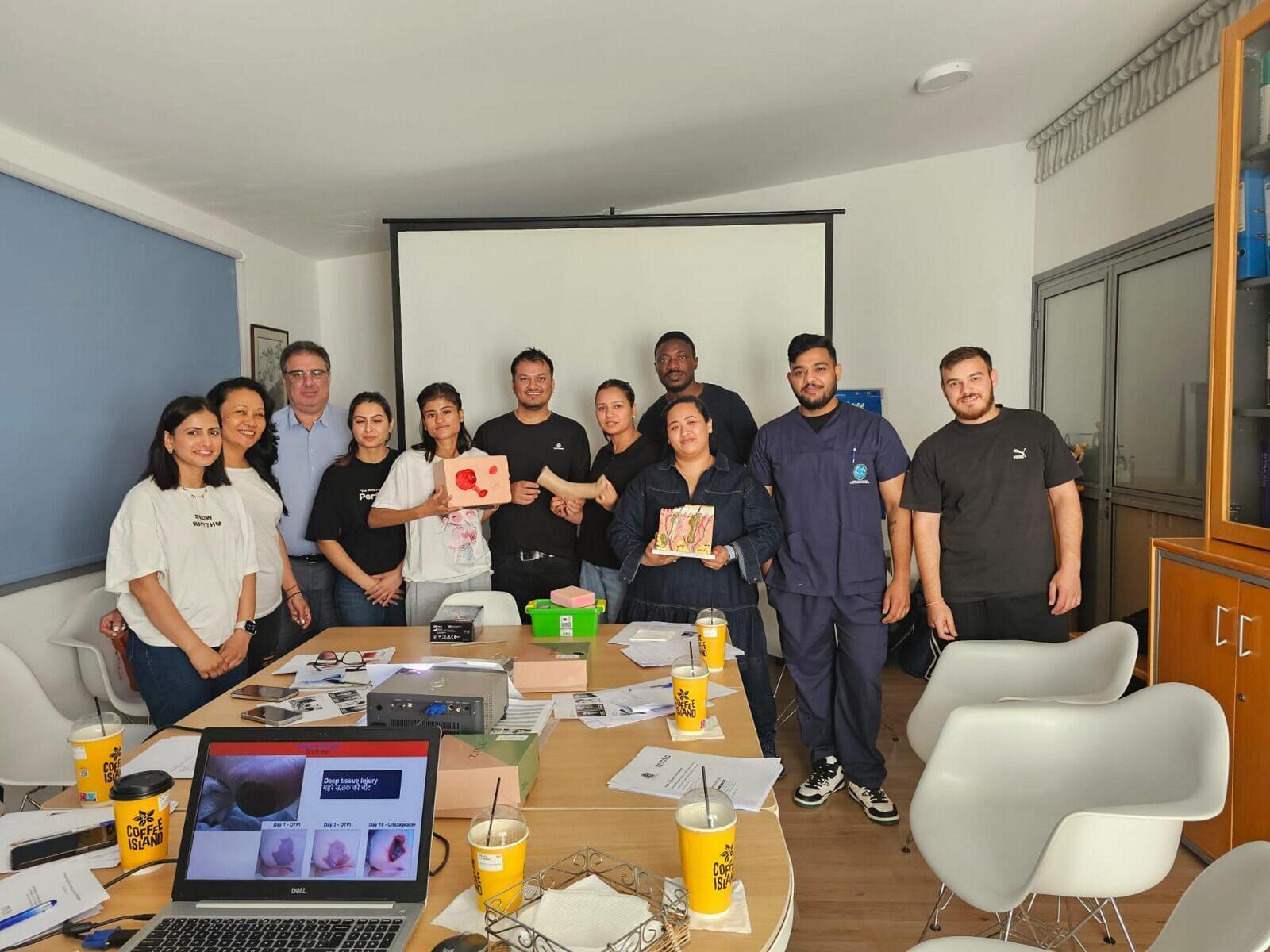
At the knowledge level, the program aimed to help participants identify factors that increase the probability of pressure injury development. These include impaired mobility, reduced sensation, compromised circulation, poor nutrition, moisture exposure, inability to reposition independently and the presence of medical devices. Participants were also expected to strengthen their understanding of wound assessment, pressure injury classification and the potential complications of advanced wounds.
At the level of clinical capability, the program focused on practical prevention. This included positioning and repositioning, heel offloading, skin observation, recognizing nutritional risk, reducing friction and shear, supporting mobility, documenting findings and selecting pressure-redistribution products according to individual needs. Participants were encouraged to distinguish between the function of a hospital bed, a hospital mattress, an overlay, an air mattress, a seating cushion and a heel-offloading device rather than treating these products as interchangeable.
At the level of professional attitudes, the program sought to reinforce prevention as a continuous responsibility. A pressure injury prevention plan must be implemented during the night as well as the day, during rehabilitation sessions as well as rest, and during transfers as well as prolonged bed care. A high-quality plan depends on consistency between nurses, caregivers, physiotherapists, occupational therapists and doctors.
The purpose was not to turn every participant into a wound-care specialist within four days. It was to strengthen the clinical reasoning required to recognize risk, take appropriate preventive action, communicate concerns and request specialist input when necessary.
This focus is supported by research on professional education. A systematic review and meta-analysis by Kim, Park and Kim (2020) found that pressure injury training programs were associated with improvements in nurses’ knowledge, visual differentiation and clinical judgment. The authors noted limitations in the available evidence and called for larger, stronger studies. The appropriate conclusion is therefore that education can improve professional competence, while successful clinical implementation also requires leadership, resources, documentation and follow-up.
A later systematic review by Kitamura et al. (2023) similarly concluded that a range of educational strategies directed at nurses could contribute to pressure injury prevention in hospitals. The reviewed outcomes included nurses’ knowledge, attitudes and pressure injury incidence, although the number and quality of available studies remained limited (Kitamura et al., 2023).
Building a common clinical language among nurses and the wider team
Structured education creates a common language. When one nurse documents “redness,” another records “skin damage,” and a third describes a “bed sore,” information becomes difficult to interpret. Standardized terminology improves communication during handover, multidisciplinary meetings and referral.
Classification education matters because inappropriate staging results in delayed escalation or inaccurate reporting. Participants need to understand that pressure injury classification is a clinical process and that not every wound over a bony prominence is automatically a pressure injury. Moisture-associated skin damage, skin tears, vascular ulcers, diabetic foot ulcers and traumatic wounds can resemble or coexist with pressure injuries.
Pressure injury identification is also more difficult across different skin tones. Reliance on visible redness alone is inadequate. Nurses should consider changes in temperature, firmness, softness, pain, swelling and tissue consistency, alongside comparison with surrounding skin and the patient’s reported symptoms. Where the diagnosis is uncertain, specialist assessment should be obtained rather than assigning a category based on appearance alone. This problem is most acute in deep tissue pressure injury, where the surface can look almost normal while the damage sits below it.
For doctors and nurses, accurate classification supports treatment planning and clinical governance. For physiotherapists and occupational therapists, it informs safe positioning and activity modification. For podiatrists, it assists differential assessment of heel or foot lesions. For hospital mattress distributors and hospital bed distributors, it provides context for understanding why a product recommendation must follow a professional assessment rather than being based only on a wound label.
The role of distributors deserves particular attention. A distributor should be able to explain the intended function, indications, limitations, cleaning requirements, weight capacity and compatibility of a support surface. A distributor should not independently diagnose a pressure injury, prescribe a treatment plan or promise healing. Premium medical distribution rests on technical competence, transparent product information and collaboration with clinicians.
Risk assessment must lead to action
Risk assessment tools support clinical judgment, but completing a score does not prevent a pressure injury. The purpose of risk assessment is to identify modifiable factors and trigger a patient-specific prevention plan.
A person may receive an identical numerical risk score for very different reasons. One patient may be unable to move because of paralysis. Another may be mobile but severely malnourished. A third may be incontinent, confused and unable to follow instructions. A fourth may have impaired perfusion and fragile skin. Each individual requires a different combination of interventions.
Nurses are central to this process because they observe patients over time. Changes in mobility, appetite, cognition, continence, pain and skin condition may occur between formal medical reviews. A nurse who recognizes that a previously mobile patient has become reluctant to turn because of pain can initiate reassessment before tissue injury develops.
Risk assessment should therefore be repeated when the patient’s condition changes, after surgery, following transfer from another facility, when mobility declines, when a medical device is introduced or when early skin changes are observed. Assessment should also include the patient’s ability to reposition independently in bed and while seated.
Education should help nurses move from the question “What is the patient’s risk score?” to the more clinically useful question: “Which specific risk factors are present, and what are we doing about each one?”
Evidence also indicates that the implementation of pressure injury prevention is influenced by organizational and behavioral factors. A systematic review by Wan et al. (2023) found that implementation is shaped by barriers and facilitators involving clinicians, patients and the healthcare environment. Knowledge alone is not enough when staff lack equipment, time, leadership support, clear responsibilities or reliable documentation systems (Wan et al., 2023).
For rehabilitation centers, this means education should be accompanied by practical systems: clear escalation pathways, access to suitable pressure-redistribution equipment, regular auditing, multidisciplinary review and feedback to staff.
Repositioning: individualized rather than automatic
Repositioning remains one of the most recognizable elements of pressure injury prevention, and it is often oversimplified into a rigid turning schedule.
The available international recommendations state that repositioning should be individualized according to activity, mobility, ability to reposition independently, skin and tissue tolerance, clinical condition, comfort, sleep patterns, goals of care and the support surface in use. The guideline suggests that two-hourly or three-hourly repositioning may be appropriate for many at-risk patients when they are also using a suitable pressure-redistributing full-body support surface. The certainty of evidence for a specific interval is very low, and clinical assessment remains essential (National Pressure Injury Advisory Panel, European Pressure Ulcer Advisory Panel and Pan Pacific Pressure Injury Alliance, 2025).
This is an important educational point. Repositioning should not become an unthinking task in which every patient is moved in the same way at the same interval. Some patients need more frequent small changes. Some can reposition themselves with verbal prompting. Some require equipment and two members of staff to move safely. Some have pain, respiratory compromise, instability or palliative-care goals that require a modified approach.
The position itself also matters. Turning a patient without reducing pressure at vulnerable areas may provide little benefit. Nurses and physiotherapists should consider whether the sacrum, trochanters, heels and other pressure points have actually been offloaded. They must also minimise friction and shear during movement.
A systematic review by Avsar et al. (2020) reported lower pressure ulcer incidence in studies using more frequent repositioning or turning teams, and the authors emphasised that the certainty of evidence was low. This supports a careful message: repositioning is an essential component of prevention, but no universal schedule can be guaranteed to prevent every pressure injury (Avsar et al., 2020). Where a patient cannot be turned reliably by hand, automated repositioning is one way of improving consistency, and it does not remove the need for the checks above.
Repositioning also has an educational and human dimension. Patients and families should understand why movement is necessary and how to participate safely. A patient who fears falling, experiences pain during turning or does not understand the purpose of repositioning may resist care. Listening to those concerns and adapting the plan can improve both dignity and adherence.
Support surfaces, hospital mattresses and air mattress technology
Hospital mattresses are a central topic in pressure care, and the choice of support surface should be based on clinical need rather than product familiarity.
The international recommendations support the use of pressure-redistribution foam full-body support surfaces for individuals at risk of pressure injuries. The guideline also includes conditional recommendations concerning reactive air surfaces and alternating-pressure air surfaces, reflecting differences in evidence certainty and individual circumstances (National Pressure Injury Advisory Panel, European Pressure Ulcer Advisory Panel and Pan Pacific Pressure Injury Alliance, 2025).
Selection should consider the patient’s overall pressure injury risk, skin and tissue response, mobility, independence, posture, sleeping position, weight distribution, microclimate requirements, exposure to moisture, shear risk, comfort and goals of care. The hospital mattress must also safely accommodate the patient’s weight, height and body dimensions.
An alternating-pressure air mattress is not automatically superior for every patient, and a high-quality foam hospital mattress is not appropriate for every clinical situation. Low-air-loss, reactive air and air-fluidised technologies serve different purposes. Product category alone does not determine clinical suitability, which is the reason a direct comparison between lateral rotation and alternating pressure surfaces is more useful to a procurement team than a specification sheet.
This is where education is valuable for nurses and procurement teams. Nurses need to recognise when the current surface may no longer meet the patient’s needs. Procurement teams need specifications that relate to patient populations and clinical pathways. Hospital mattress distributors need to provide accurate technical information, training, maintenance support and clear instructions for use. Hospital bed distributors need to confirm compatibility between the bed frame, mattress dimensions, side rails, patient weight and other safety requirements.
Support surfaces should also be considered during transport, procedures and transitions. A patient may be cared for on an advanced hospital mattress but spend several hours on an unsuitable trolley or chair. Prevention fails when attention is limited to the patient’s main bed.
For this reason, a pressure care strategy should include full-body support surfaces, seating support, heel protection and safe transfer equipment. It should also include inspection, maintenance, decontamination and staff education. A sophisticated air mattress that is incorrectly set, damaged, covered with unsuitable layers or used for the wrong patient may not deliver the intended pressure redistribution. The multiTURN® 6 multifunction lateral turning mattress is built around that same principle: the technology assists the prevention plan, it does not replace it.
Medical device companies and hospital mattress distributors should therefore avoid statements such as “prevents all bedsores” or “guarantees healing.” These claims are scientifically and ethically weak. A more credible message is:
“Designed to support pressure redistribution as part of an individualised pressure injury prevention and treatment plan led by qualified healthcare professionals.”
That wording protects clinical trust and accurately positions the technology as one element of multidisciplinary care.
Seating, cushions and the role of rehabilitation professionals
Pressure injury prevention does not end when the patient leaves the bed. For many rehabilitation patients, sitting is a central part of therapy and daily life. Wheelchair use may increase independence, participation and social interaction, and prolonged sitting without adequate pressure redistribution can expose the ischial areas, sacrum, thighs and other tissues to sustained loading.
The international guideline recommends a seating support surface with pressure-redistribution properties for people at risk of pressure injuries while seated. It also advises consideration of body size, posture, deformity, asymmetry, weight distribution, mobility, activity, independence and personal goals when selecting a chair or wheelchair system (National Pressure Injury Advisory Panel, European Pressure Ulcer Advisory Panel and Pan Pacific Pressure Injury Alliance, 2025). Active seated redistribution is the specific purpose of the SAFESiT® multicycle alternating pressure cushion.
Physiotherapists and occupational therapists lead in this area. They assess posture, muscle tone, transfers, balance, range of movement and functional ability. They can identify whether a patient slides forward, leans to one side or lacks sufficient foot support. Such problems may increase pressure and shear even when a pressure-redistributing cushion is present.
Cushion selection should therefore be part of a seating assessment rather than a retail decision based only on diagnosis or body weight. The cushion must function with the wheelchair and the patient’s posture. Its cover must be correctly fitted, and the product must be inspected and maintained.
Nurses and caregivers also require education because they observe the patient between therapy sessions. They may notice redness, discomfort, increasing asymmetry or reduced ability to perform weight shifts. They must know when to limit sitting, reposition the patient or request reassessment.
The same principle applies to rehabilitation center procurement. Purchasing identical cushions for all patients appears efficient and can be clinically inappropriate. A range of products and a structured assessment process are more consistent with evidence-informed care.
Heel pressure injury prevention and podiatric collaboration
The heel is particularly vulnerable because it has limited soft tissue between the skin and the underlying bone. Patients who are immobile, critically ill, neuropathic or affected by vascular disease may be at increased risk.
The 2025 prevention recommendations describe heel elevation as good practice for at-risk individuals so that the heels are not in contact with the support surface. They also suggest using an appropriate heel-offloading device, selected according to the patient’s mobility and activity level. When a specialised device is unavailable or unsuitable, pillows or cushions may be used if they are positioned with sufficient height to achieve true heel clearance (National Pressure Injury Advisory Panel, European Pressure Ulcer Advisory Panel and Pan Pacific Pressure Injury Alliance, 2025).
The phrase “true heel clearance” is important. Placing a small pad beneath the heel may add material without removing pressure. Effective offloading requires the heel to be suspended, while the lower leg is supported appropriately and excessive pressure is not transferred to another vulnerable area.
Podiatrists contribute valuable expertise when heel or foot lesions are present, especially in patients with diabetes, neuropathy, vascular disease, altered biomechanics or previous amputation. Not every heel wound is solely a pressure injury; differential assessment may be necessary.
Doctors, nurses, podiatrists and physiotherapists should also consider whether the chosen offloading device affects walking, transfers, falls risk, ankle position or rehabilitation goals. A device that is effective while the patient is in bed may need to be removed before mobilisation, according to its instructions and the clinical plan.
For medical device distributors, this reinforces the need to explain product indications and limitations. Heel-protection products should not be marketed as one-size-fits-all solutions. Staff training, correct sizing and ongoing skin inspection are essential.
Nutrition, hydration and tissue resilience
Malnutrition does not explain every pressure injury, and poor nutritional status increases vulnerability and interferes with recovery. Rehabilitation patients may experience reduced appetite, swallowing difficulty, cognitive impairment, depression, fatigue, gastrointestinal disease or dependence on assistance with eating.
The international recommendations state that individuals at risk of pressure injury should receive nutrition screening. Those found to be at risk of malnutrition should receive a comprehensive nutritional assessment and an individualized plan. A balanced diet, nutrient-dense food and adequate hydration are encouraged. Nutritional or protein supplementation may be considered when an individual is malnourished or at risk and cannot meet requirements through usual intake, although the certainty of evidence for some supplementation recommendations remains very low (National Pressure Injury Advisory Panel, European Pressure Ulcer Advisory Panel and Pan Pacific Pressure Injury Alliance, 2025).
This nuanced message should be preserved in nurse education. It is not scientifically responsible to imply that a single supplement prevents or heals pressure ulcers. Nutritional support should follow assessment and be integrated with pressure redistribution, wound management, management of underlying disease and rehabilitation.
Nurses are often the first professionals to notice reduced intake, weight loss or difficulty eating. Dietitians can then assess requirements and formulate a plan. Speech and language therapists may be required when swallowing is impaired. Doctors may need to investigate reversible medical causes. Caregivers can support food intake and hydration according to the patient’s abilities and preferences.
Education should also counter a common misconception: a normal body weight does not exclude malnutrition. A patient may have obesity and still have inadequate protein or micronutrient intake. Clinical screening and assessment are therefore more reliable than appearance alone.
Skin care, moisture, friction and shear
Pressure injuries arise through complex interactions, not pressure alone. Moisture, temperature, friction, shear, tissue tolerance and impaired perfusion all influence risk.
Incontinence may expose skin to urine or faeces, leading to inflammation and moisture-associated skin damage. This condition is not identical to a pressure injury, although both can occur together. Nurses need the skills to distinguish patterns of damage, protect the skin, manage incontinence and escalate diagnostic uncertainty.
Friction occurs when the skin moves against another surface. Shear occurs when deeper tissues move in a different direction from the skin, such as when a patient slides down in bed. Excessive head-of-bed elevation may increase sliding in some patients, although elevation may be clinically necessary for respiratory or aspiration-related reasons.
The international guideline suggests maintaining head-of-bed elevation at 30 degrees or lower for pressure injury prevention when clinically appropriate, while recognizing that some patients require a higher position for medical reasons. This is an example of why clinical guidance cannot be applied mechanically. Pressure care must be balanced with respiratory safety, swallowing, comfort and the overall clinical condition.
Training should therefore teach principles rather than isolated rules. The safest position is the one that appropriately balances all relevant risks for that particular patient.
From individual interventions to a prevention bundle
Pressure injury prevention works best when separate actions are integrated into a coherent care process. A prevention bundle may include risk assessment, skin inspection, repositioning, mobilisation, support surfaces, heel offloading, moisture management, nutrition and patient education. Evidence-based prevention frameworks set out how those components fit together.
A 2024 systematic review and meta-analysis found that hospital pressure injury prevention bundles were associated with a reduction in hospital-acquired pressure injuries, although the authors rated the certainty of evidence as very low. The bundles contained several components, and it was difficult to determine which elements were most influential (Chaboyer et al., 2024).
This finding supports balanced implementation. Prevention bundles are promising, and they should not be presented as guaranteed solutions. Their success depends on whether staff understand them, whether the required products are available and whether adherence is monitored.
At the Rehabilitation Center Agios Ioannis Lambadistis, the educational programme was intended to connect these components. Repositioning was not taught in isolation from hospital mattresses. Nutrition was not separated from wound assessment. Seating was not separated from rehabilitation. Documentation was not separated from communication.
This integrated approach is particularly appropriate for rehabilitation centers because patients move across different environments and professional teams throughout the day.
The economic case for prevention, without exaggeration
Pressure injuries impose a substantial economic burden, and cost claims must be communicated carefully.
A UK analysis by Dealey, Posnett and Walker (2012) estimated that treatment costs increased from approximately £1,214 for a Category 1 pressure ulcer to £14,108 for a Category 4 ulcer at the prices used in that study. Higher costs were associated with longer healing times and more complications. These figures are historical UK estimates and should not be presented as current costs in Cyprus, but they clearly demonstrate how expenditure rises with severity (Dealey, Posnett and Walker, 2012).
An earlier UK study also found that a large proportion of pressure ulcer treatment costs was associated with nursing time (Bennett, Dealey and Posnett, 2004). Again, these findings belong to a specific healthcare system and price period, and they highlight the operational consequences for nursing services.
A systematic review by Demarré et al. (2015) found wide variation in the reported costs of pressure ulcer prevention and treatment across settings and studies. Such variation means that cost estimates should not be transferred between countries without adjustment for prices, prevalence, staffing and healthcare structure (Demarré et al., 2015).
For scientific accuracy, the proposed estimate of 6,400 annual cases and up to €128 million in Cyprus should not be presented as an established fact unless its methodology and source can be independently reviewed. Similarly, the claim that pressure ulcers are the “second most expensive disease after cancer” should not be attributed broadly to the NHS without a specific, verifiable analysis supporting that exact comparison.
The defensible conclusion is that pressure injuries consume substantial resources; costs generally increase with severity; and effective prevention may protect patients while reducing avoidable treatment, nursing workload and length of care.
Patient safety, accountability and legal risk
Advanced pressure injuries raise serious concerns about the quality and continuity of care. It is neither scientifically nor legally accurate to state that every Category or Stage 3 or 4 pressure injury is automatically proof of medical or nursing error.
Some pressure injuries may occur despite appropriate preventive care, particularly in patients with severe physiological instability, impaired perfusion, multiple organ dysfunction or end-of-life conditions. In other cases, delayed assessment, incomplete documentation, failure to implement prevention or poor communication may contribute.
The appropriate educational emphasis is therefore accountability rather than accusation. Healthcare organizations should demonstrate that risk was assessed, preventive measures were individualized, skin changes were recognized, the care plan was reviewed, and the patient or family was informed.
Good documentation supports patient safety and provides evidence of clinical reasoning. It should record the assessment, identified risk factors, skin condition, repositioning plan, support surface, nutritional actions, patient participation and any barriers to implementation.
Education may reduce legal exposure indirectly by improving the quality, consistency and traceability of care. It should not be promoted as a guarantee against complaints or litigation.
The human cost behind the clinical terminology
Pressure injury prevention is often discussed through categories, scores, mattresses and protocols. Every pressure injury belongs to a person.

A wound can make it painful to sit with family, participate in physiotherapy or sleep comfortably. Dressings and odour may affect dignity and confidence. A patient may fear movement because movement hurts. A caregiver may feel guilty, even when the condition is clinically complex. Nurses may experience moral distress when workload or resource limitations prevent them from delivering the standard of care they believe is necessary.
Human-centered pressure care begins by involving the patient. The care team should explain risk in understandable language, ask about pain and comfort, and encourage movement where safe. Patients who can reposition independently should be supported to do so. Families and informal caregivers should receive practical education without being made to feel blamed.
This human dimension was central to the rationale for the four-day programme. Advanced technology has value, and technology cannot observe discomfort, listen to a patient or coordinate a team. A hospital mattress can redistribute pressure; it cannot replace nursing judgement. A cushion can support sitting; it cannot determine whether sitting duration remains appropriate. A heel-offloading device can remove pressure; it cannot monitor circulation or skin changes by itself.
A model for high-quality clinical education

A strong pressure injury education program does not end when the final presentation finishes. Knowledge must be reinforced through clinical practice.
Following a program such as the one delivered by ABeWER and MATC Academy, rehabilitation centers may consider competency assessment, case discussion, bedside coaching, equipment audits, documentation review and monitoring of pressure injury incidence. Refresher education is valuable when new guidelines, hospital mattresses, hospital beds, cushions or medical devices are introduced.
The most meaningful outcomes are not attendance certificates alone. They include improved risk recognition, more consistent skin assessment, appropriate support-surface selection, timely escalation, stronger multidisciplinary communication and measurable adherence to prevention plans.
Pressure injury indicators should also be interpreted carefully. A temporary increase in reported cases after training may reflect better recognition and documentation rather than worse care. Organizations should therefore distinguish between injuries present on admission and those acquired during care, analyse severity and location, and review individual cases for learning.
Leadership is essential. Nurses cannot implement evidence-informed pressure care without adequate staffing, functioning equipment and access to specialist advice. Hospital mattress distributors and hospital bed distributors cannot replace internal governance and can contribute through technical training, maintenance and accurate product documentation. Doctors, physiotherapists, occupational therapists, podiatrists and dietitians should be included in pathway design rather than consulted only after a wound becomes severe.
ABeWER and MATC Academy: clinical credibility through education
For ABeWER, the Nicosia program represents more than a product presentation. It reflects a medical-brand strategy grounded in clinical education, multidisciplinary cooperation and responsible technology use. It follows the same pattern as the international pressure care program and the advanced education program at EOKA Fighters Melathron.
The strongest position for ABeWER is not to claim that one air mattress, hospital mattress or cushion can eliminate pressure injuries. It is to demonstrate understanding of the entire pressure care pathway: risk, skin, mobility, nutrition, positioning, support surfaces, seating, heel protection, documentation and follow-up. That understanding is also what the ABeWER research and development department is built to sustain.
This approach is relevant to hospitals, rehabilitation centers, nursing homes, home-care providers, hospital mattress distributors and hospital bed distributors. Procurement decisions improve when buyers understand the clinical problem a product is intended to address. Distribution partnerships become more credible when they include staff education and technical support. Patients and caregivers develop greater trust when information is clear, realistic and free from exaggerated promises.
The collaboration with MATC Academy also reinforces the role of structured professional development. Education delivered over four days allows time for concepts to be revisited, questions to be discussed and clinical reasoning to be connected with practical pressure care technologies.
Conclusion
The four-day specialist program delivered by ABeWER and MATC Academy at the Rehabilitation Center Agios Ioannis Lambadistis in Nicosia addressed one of the most important patient-safety challenges in rehabilitation care.
Led by Christos Chapeshis, Gerontologist and CEO of ABeWER, the programme focused on helping nurses and the multidisciplinary team strengthen their knowledge, clinical capabilities and professional approach to pressure injury prevention and treatment.
The central message is clear: pressure injuries, pressure ulcers, bedsores and decubitus sores cannot be addressed through one product or one professional discipline. Effective pressure care requires trained nurses, engaged doctors, physiotherapists, occupational therapists, dietitians, podiatrists and caregivers. It requires appropriate hospital mattresses, hospital beds, seating systems and offloading devices. Above all, it requires clinical assessment, individualisation and consistent implementation.
The scientific evidence supports education as an important contributor to nurses’ knowledge and judgement, while also showing that education must be accompanied by organisational support. International guidance emphasises repositioning, nutrition, mobility, heel offloading, seating and pressure-redistribution support surfaces as interconnected components of prevention.
For hospitals and rehabilitation centers, investment in pressure injury education is an investment in safer care. For hospital mattress distributors and hospital bed distributors, it is a reminder that responsible medical technology must be accompanied by training and transparent clinical communication. For patients and families, it offers something equally important: the reassurance that prevention is being approached not as a routine task, but as a coordinated, evidence-informed and deeply human responsibility.
Healthcare organisations and distribution partners who want to discuss clinical education or pressure care technology can reach the team through the ABeWER contact page, or read more about the people behind the programme on the ABeWER team page.
Keywords
Pressure injury; pressure ulcer; pressure injuries; pressure ulcers; bedsores; bed sores; decubitus sores; decubitus ulcers; pressure care; pressure injury prevention; nurses; nurse education; hospitals; rehabilitation centers; Rehabilitation Center Agios Ioannis Lambadistis; ABeWER; MATC Academy; EPUAP; NPIAP; PPPIA; hospital mattress; air mattress; pressure-redistribution mattress; hospital mattress distributors; hospital bed distributors; physiotherapist; physiotherapists; podiatrist; podiatrists; doctors; caregivers; wound care; heel offloading; repositioning; seating cushions; medical devices; Cyprus; Nicosia.
References
Avsar, P., Moore, Z., Patton, D., O’Connor, T., Budri, A.M.V. and Nugent, L. (2020) ‘Repositioning for preventing pressure ulcers: a systematic review and meta-analysis’, Journal of Wound Care, 29(9), pp. 496–508. doi: 10.12968/jowc.2020.29.9.496
Bennett, G., Dealey, C. and Posnett, J. (2004) ‘The cost of pressure ulcers in the UK’, Age and Ageing, 33(3), pp. 230–235. doi: 10.1093/ageing/afh086
Chaboyer, W. et al. (2024) ‘The effect of pressure injury prevention care bundles on pressure injuries in hospital patients: a complex intervention systematic review and meta-analysis’, International Journal of Nursing Studies, 155, article 104768. doi: 10.1016/j.ijnurstu.2024.104768
Dealey, C., Posnett, J. and Walker, A. (2012) ‘The cost of pressure ulcers in the United Kingdom’, Journal of Wound Care, 21(6), pp. 261–266. doi: 10.12968/jowc.2012.21.6.261
Demarré, L. et al. (2015) ‘The cost of prevention and treatment of pressure ulcers: a systematic review’, International Journal of Nursing Studies, 52(11), pp. 1754–1774. doi: 10.1016/j.ijnurstu.2015.06.006
Kim, G., Park, M. and Kim, K. (2020) ‘The effect of pressure injury training for nurses: a systematic review and meta-analysis’, Advances in Skin and Wound Care, 33(3), pp. 1–11. doi: 10.1097/01.ASW.0000653164.21235.27
Kitamura, J.C., Nicolosi, J.T., Paggiaro, A.O. and Carvalho, V.F. (2023) ‘Educational interventions on preventing pressure injuries targeted at nurses: systematic review and meta-analysis’, British Journal of Nursing, 32(Sup20), pp. S40–S53. doi: 10.12968/bjon.2023.32.Sup20.S40
National Pressure Injury Advisory Panel, European Pressure Ulcer Advisory Panel and Pan Pacific Pressure Injury Alliance (2025) Prevention and Treatment of Pressure Ulcers/Injuries: Quick Reference Guide, Prevention Recommendations. 4th edn. Edited by E. Haesler. Available at: internationalguideline.com.
Sugathapala, R.D.U.P. et al. (2023) ‘Prevalence and incidence of pressure injuries among older people living in nursing homes: a systematic review and meta-analysis’, International Journal of Nursing Studies, 148, article 104605.
Wan, C.S. et al. (2023) ‘Barriers and facilitators to implementing pressure injury prevention and management in acute care: a systematic review’, International Journal of Nursing Studies, 145, article 104557.
Wang, H. et al. (2014) ‘Impact of pressure ulcers on outcomes in inpatient rehabilitation facilities’, American Journal of Physical Medicine and Rehabilitation, 93(3), pp. 207–216.
Harvard author–date citations and the alphabetic reference-list structure used here follow the supplied University of Sheffield referencing guide, which distinguishes brief in-text citations from full bibliographic entries.